







What's Happening?
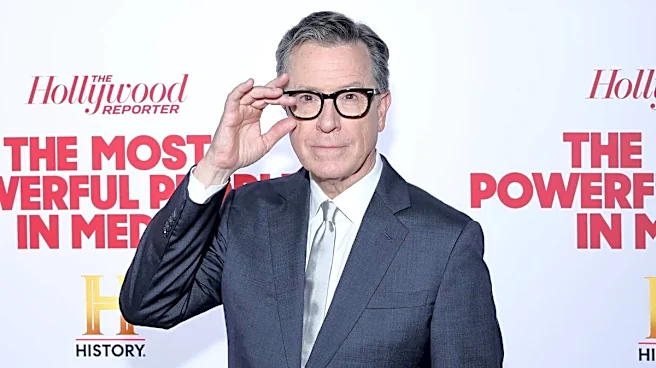
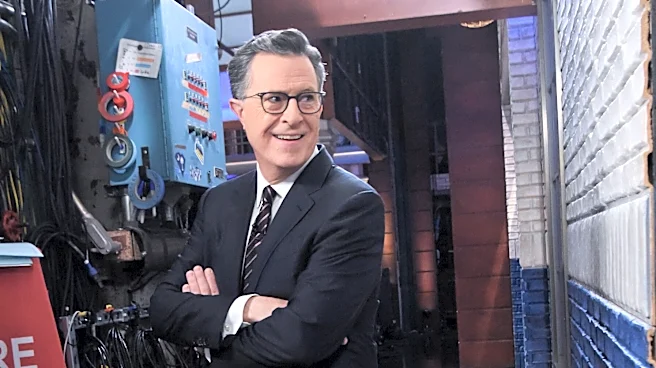
Stephen Colbert is set to leave 'The Late Show,' marking the end of an era for in-depth celebrity interviews on late-night television. Colbert, who took over from David Letterman in 2015, has been known for his ability to blend humor with thoughtful questioning,
often drawing out sincere and emotional responses from his guests. A notable example was his interview with Andrew Garfield, where Colbert's questions led to a heartfelt discussion about Garfield's late mother. Colbert's departure is attributed to financial decisions by CBS, although some speculate political motivations, particularly given President Trump's public comments about Colbert's exit. The shift away from Colbert's style of interviewing reflects a broader trend in media, where celebrity interactions are increasingly dominated by platforms that prioritize promotional content over substantive dialogue.
Why It's Important?
Colbert's exit highlights a significant change in the landscape of celebrity media. His interviews often provided a platform for genuine conversation, contrasting with the current trend of superficial soundbites prevalent on social media and other platforms. This shift could impact how celebrities engage with the public, potentially reducing opportunities for audiences to see a more nuanced side of public figures. The move also underscores the financial pressures on traditional broadcast networks, which are struggling to compete with digital and streaming platforms. As a result, the nature of celebrity interviews may continue to evolve, prioritizing entertainment and promotion over depth and authenticity.
What's Next?
With Colbert's departure, late-night television may continue to lean towards more entertainment-focused content, as seen with hosts like Jimmy Fallon and Jimmy Kimmel. This could lead to a further decline in the type of probing interviews that Colbert was known for. Meanwhile, digital platforms and podcasts that offer celebrities more control over their narratives may become increasingly popular. The media landscape will likely continue to adapt to these changes, with potential implications for how public figures are perceived and how they communicate with their audiences.
Beyond the Headlines
The trend towards more controlled and promotional celebrity interviews raises questions about the role of media in holding public figures accountable. As platforms prioritize comfort and self-promotion, there is a risk that important conversations about cultural and societal issues may be sidelined. This shift could also influence public discourse, as audiences receive less critical engagement with influential figures. The long-term impact on media ethics and the public's access to diverse perspectives remains to be seen.