
What's Happening?
NASA and Boeing have collaborated to test a new design of flexible wings for future airliners, aiming to improve fuel efficiency and passenger comfort. The tests were conducted in NASA Langley Research
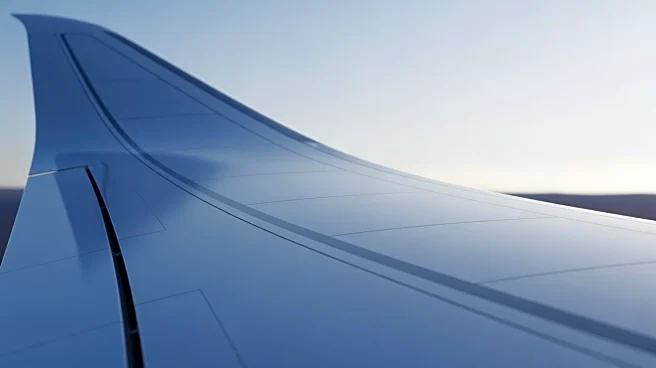
Center's Transonic Dynamics Tunnel, using a model with longer, thinner wings equipped with 10 control surfaces. These surfaces help manage airflow and reduce vibrations caused by wind gusts, a phenomenon known as wing flutter. The project, part of NASA's Advanced Air Transport Technology initiative, seeks to address the challenges of aeroelastic instabilities that can lead to catastrophic failures if not properly managed. The tests have shown promising results in reducing wing vibrations, which could lead to significant improvements in aircraft performance.
Why It's Important?
The development of flexible wings represents a significant advancement in aircraft design, potentially leading to more fuel-efficient and environmentally friendly air travel. By reducing drag and improving aerodynamic efficiency, these wings could lower operational costs for airlines and reduce carbon emissions. The collaboration between NASA and Boeing highlights the importance of innovation in maintaining the competitiveness of the U.S. aerospace industry. Successful implementation of this technology could set new standards for commercial aviation, influencing future aircraft designs and manufacturing processes.
What's Next?
Following the successful tests, NASA and Boeing will analyze the data to refine their models and share findings with the aviation community. This collaboration could lead to the adoption of flexible wing designs in the next generation of commercial aircraft. Airlines and manufacturers will evaluate the potential benefits and challenges of integrating this technology into their fleets. Further research and development are expected to continue, focusing on optimizing control systems and ensuring the safety and reliability of these advanced wing designs.