






What's Happening?
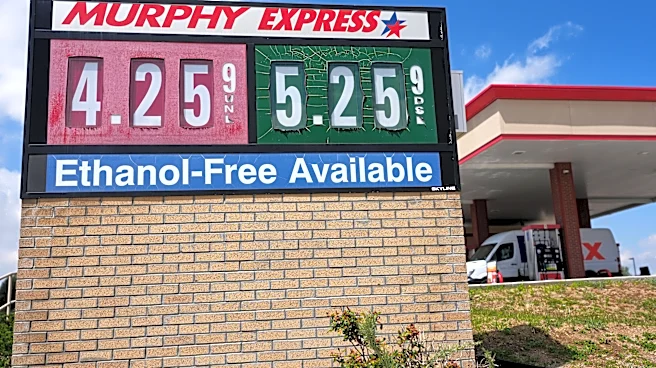
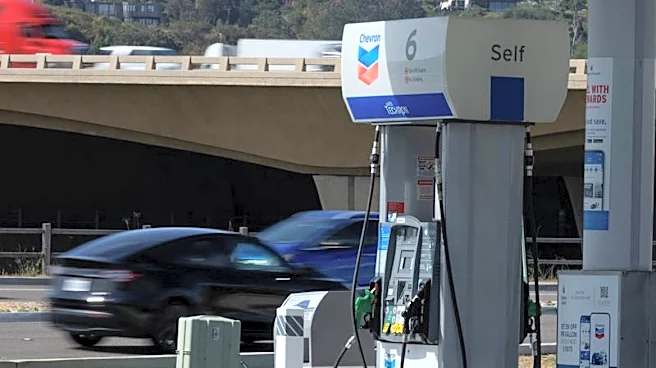
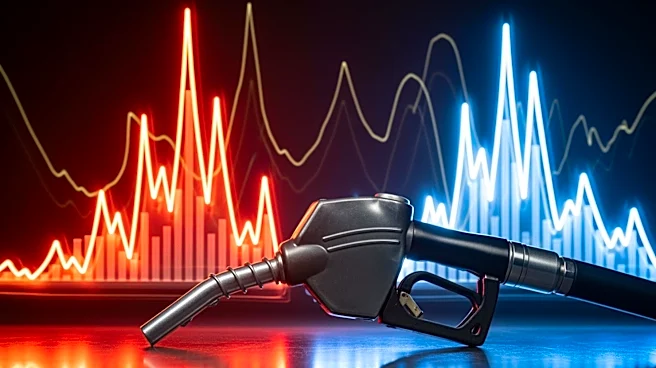
The phenomenon known as 'rocket-and-feathers' describes the rapid rise and slow fall of gas prices, a pattern currently observed due to fluctuations in crude oil prices amid geopolitical tensions. Economists attribute this to the behavior of gas stations
and consumer habits. When crude oil prices increase, gas stations quickly raise prices to maintain profit margins. However, when prices decrease, stations are slower to lower them, as consumers are less likely to shop around for better deals. This pattern is exacerbated by the current geopolitical situation, including the Iran war, which has caused crude prices to oscillate significantly.
Why It's Important?
Understanding the 'rocket-and-feathers' phenomenon is crucial for consumers and policymakers as it affects household budgets and economic planning. The slow decline in gas prices can strain consumers financially, especially when geopolitical events cause significant price spikes. This pattern also highlights the complexities of the oil market and the influence of consumer behavior on pricing dynamics. Policymakers may need to consider strategies to mitigate the impact of volatile gas prices on consumers, such as promoting alternative energy sources or improving public transportation options.
Beyond the Headlines
The persistent 'rocket-and-feathers' pattern in gas pricing underscores the need for greater transparency and competition in the fuel market. It also raises questions about the role of media coverage in shaping consumer perceptions and behaviors. As gas prices remain a critical economic indicator, understanding the underlying factors can help consumers make informed decisions and encourage policymakers to address market inefficiencies. The situation also highlights the potential benefits of diversifying energy sources to reduce reliance on volatile oil markets.