


What's Happening?
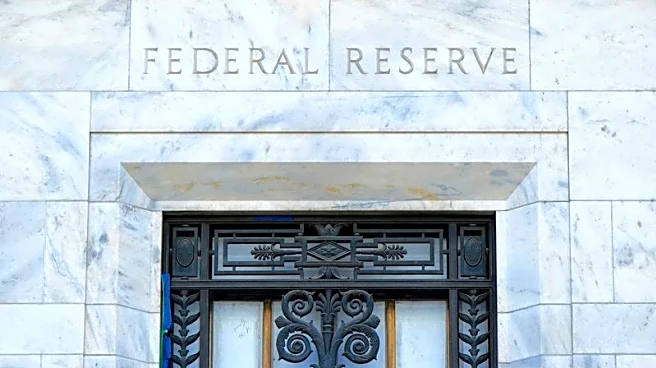
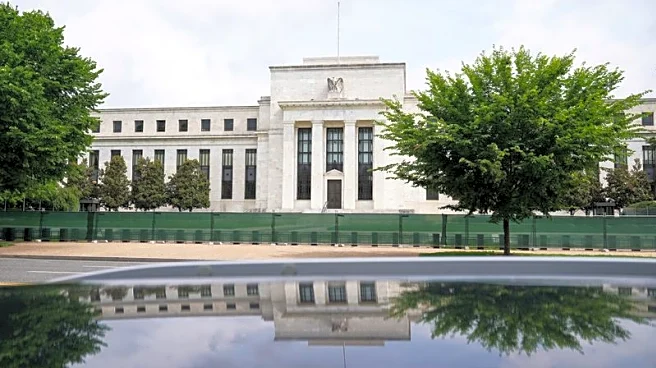
The Federal Reserve has decided to maintain its key interest rate within the range of 3.5%-3.75%, as announced on March 18, 2026. This decision comes amidst higher-than-expected inflation and mixed signals from the labor market, compounded by the ongoing
conflict in Iran. The Federal Open Market Committee (FOMC) voted 11-1 in favor of this decision. Federal Reserve Chair Jerome Powell highlighted the uncertainty surrounding the economic impact of the Iran war, particularly its effects on oil prices and inflation. Despite these challenges, the Fed's 'dot plot' indicates expectations for a rate cut later this year and another in 2027.
Why It's Important?
The Federal Reserve's decision to hold interest rates steady is significant as it reflects the central bank's cautious approach in navigating economic uncertainties. The ongoing conflict in Iran has disrupted global oil markets, potentially exacerbating inflationary pressures in the U.S. This situation complicates the Fed's efforts to manage inflation while supporting economic growth. The decision impacts various stakeholders, including consumers and businesses, as borrowing costs remain unchanged. Additionally, the Fed's stance signals its focus on long-term economic stability despite short-term pressures.
What's Next?
Looking ahead, the Federal Reserve is expected to closely monitor the economic implications of the Iran conflict, particularly its impact on oil prices and inflation. The central bank has indicated the possibility of rate cuts in the future, contingent on economic conditions. Stakeholders, including businesses and policymakers, will be watching for further guidance from the Fed on its monetary policy direction. The ongoing geopolitical tensions and their economic repercussions will likely influence the Fed's future decisions.