






What's Happening?
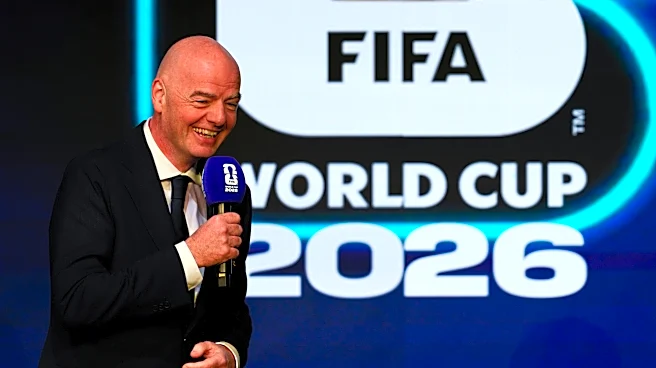
The upcoming FIFA World Cup Final, scheduled for July 19 at MetLife Stadium in East Rutherford, New Jersey, will feature a historic halftime show with performances by Madonna, Shakira, and BTS. This marks the first-ever halftime show for the World Cup Final, curated
by Coldplay's Chris Martin. The event aims to support the FIFA Global Citizen Education Fund, which focuses on expanding access to quality education and football for children worldwide. The show will also include appearances by Sesame Street Muppets, including Kermit and Miss Piggy. Shakira will perform 'Dai Dai,' a song created for the World Cup and the education fund initiative. Despite the excitement surrounding the entertainment lineup, the 2026 FIFA World Cup has faced criticism over high ticket prices and dynamic pricing strategies, with some tickets reportedly costing thousands of dollars. Additionally, political and logistical issues have arisen, including travel restrictions imposed by the White House on several countries, affecting teams participating in the tournament.
Why It's Important?
The inclusion of high-profile artists like Madonna, Shakira, and BTS in the World Cup Final halftime show highlights the growing intersection of sports and entertainment, aiming to draw a broader audience and enhance the event's global appeal. The collaboration with the FIFA Global Citizen Education Fund underscores a commitment to social causes, potentially increasing awareness and support for educational initiatives. However, the controversies surrounding the event, such as exorbitant ticket prices and travel restrictions, could overshadow the positive aspects, affecting public perception and attendance. The political implications of travel bans may also strain international relations and impact the participation of affected teams, potentially influencing the tournament's competitive landscape.
What's Next?
As the World Cup Final approaches, stakeholders will likely focus on addressing the logistical and political challenges to ensure a successful event. FIFA and event organizers may need to engage in dialogue with affected countries to mitigate diplomatic tensions and ensure fair competition. Additionally, efforts to manage public relations and address concerns over ticket pricing could be crucial in maintaining fan engagement and satisfaction. The halftime show, with its star-studded lineup, is expected to draw significant media attention, potentially shifting focus from the controversies to the positive impact of the educational initiatives supported by the event.
Beyond the Headlines
The decision to feature a halftime show at the World Cup Final reflects a broader trend of integrating entertainment into major sporting events, potentially setting a precedent for future tournaments. This shift could influence how sports organizations approach event planning, prioritizing entertainment value alongside athletic competition. The involvement of global artists and educational initiatives may also inspire similar collaborations in other sports, promoting social causes and expanding the cultural significance of sporting events. However, the challenges faced by the 2026 World Cup highlight the complexities of organizing international events in a politically charged environment, emphasizing the need for careful navigation of geopolitical issues.