
What's Happening?
Wilson Sons, a Brazilian maritime logistics and port operator, has commenced testing drone deliveries for offshore logistics operations in Guanabara Bay. The initiative aims to improve efficiency and reduce
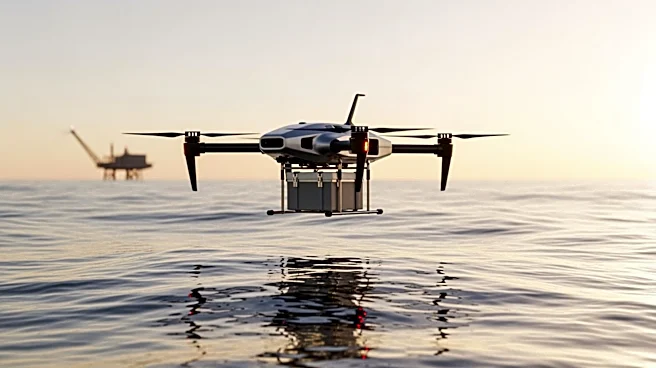
emissions by using drones to deliver and collect documents for platform supply vessels. The trials, which began on April 6, are being conducted from Wilson Sons' offshore support base in Rio. The drones, operated by Speedbird Aero, are in a proof-of-concept phase to assess technical feasibility. The company has secured all necessary approvals from Brazilian authorities, including the National Civil Aviation Agency and the Department of Airspace Control. The drones can carry lightweight items up to five kilograms, with delivery times estimated at nine minutes over distances of about eight kilometers.
Why It's Important?
The use of drones in offshore logistics represents a significant advancement in the maritime industry, potentially setting a precedent for similar operations worldwide. By enhancing operational efficiency and reducing carbon emissions, Wilson Sons is contributing to the decarbonization of the offshore energy industry. This initiative aligns with global sustainability goals and could influence other companies to adopt similar technologies, thereby accelerating the transition to more sustainable logistics solutions. The success of these trials could lead to broader implementation, impacting the logistics and maritime sectors by reducing costs and improving service delivery.
What's Next?
If the trials prove successful, Wilson Sons may expand the use of drones to other operations, potentially leading to widespread adoption in the maritime logistics industry. This could prompt regulatory bodies to develop new guidelines and standards for drone operations in offshore environments. Additionally, other companies in the sector might explore similar technologies, fostering innovation and competition. Stakeholders, including environmental groups and industry leaders, will likely monitor the outcomes closely, as the initiative could serve as a model for integrating technology with sustainability in logistics.