




What's Happening?
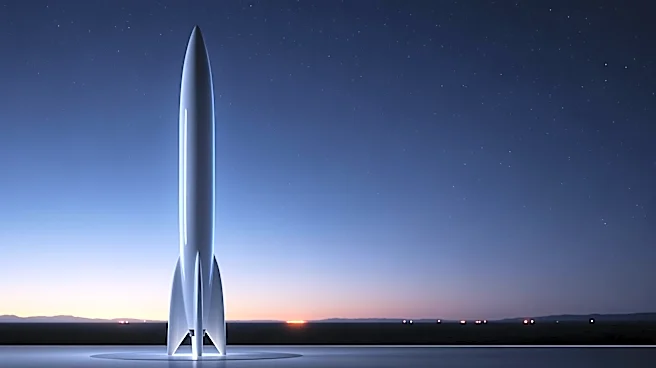
SpaceX is set to launch the third major iteration of its Starship-Super Heavy rocket, known as Starship V3, on May 19, 2026, from its Starbase site in South Texas. This launch marks the first use of the updated Launch Pad 2, which supports both launch and
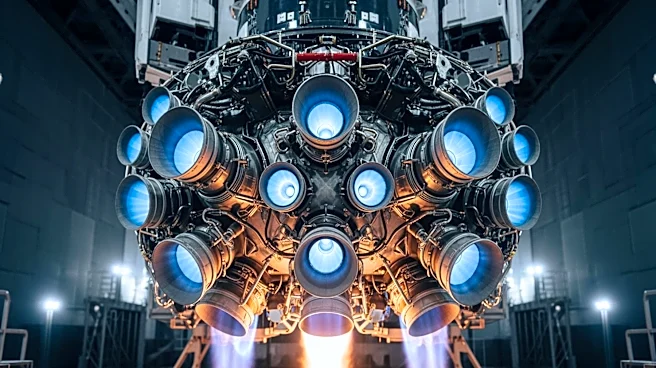
catch capabilities. The mission, dubbed Flight 12, will feature the new Raptor 3 engines, which have been upgraded for increased thrust and efficiency. The primary goal of this flight is to test the redesigned elements of the Starship architecture, which aim to enable full and rapid reuse. The mission will include a suborbital flight profile, with the first stage, Booster 19, performing a controlled splashdown in the Gulf of Mexico, and the upper stage, Ship 39, landing in the Indian Ocean. Additionally, the mission will deploy 22 simulator Starlink satellites, two of which will test new capabilities related to Starship's heat shield.
Why It's Important?
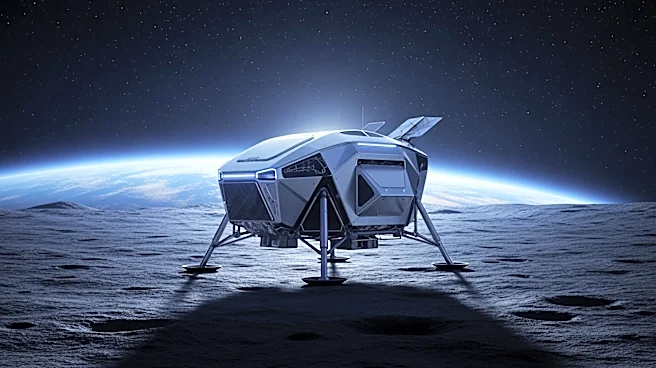
The successful launch and operation of Starship V3 are crucial for SpaceX's long-term goals of space exploration and colonization, particularly in supporting NASA's Artemis program, which aims to return humans to the Moon. The new capabilities of Starship V3, such as in-space propellant transfer and enhanced reusability, are essential for future deep-space missions, including those to Mars. The advancements in the Raptor engines and the integration of new technologies demonstrate SpaceX's commitment to innovation and efficiency in space travel. This launch also represents a significant step in developing multi-launch architectures, which are necessary for building larger exploration systems for missions beyond the Moon.
What's Next?
Following the debut of Starship V3, SpaceX will focus on further testing and refining the vehicle's capabilities, particularly the propellant transfer technology, which is vital for long-duration missions. The data collected from this mission will inform future launches and help improve the design and functionality of the Starship system. SpaceX's progress will be closely monitored by NASA and other stakeholders in the space industry, as the success of these technologies could influence future collaborations and contracts. Additionally, the outcomes of this mission may impact the timeline and strategies for upcoming missions to the Moon and Mars.