



What's Happening?
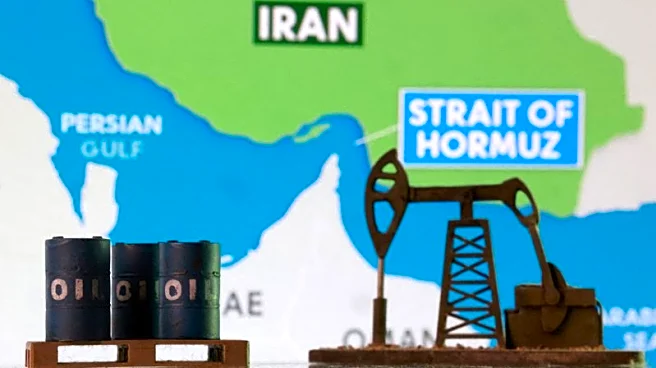
The ongoing conflict in the Middle East, particularly involving Iran, has led to a significant rise in oil and gas prices, affecting U.S. consumers. The closure of the Strait of Hormuz, a critical passage for global oil shipments, has caused a halt in shipping
operations and rerouted vessels, leading to a surge in oil prices. U.S. benchmark West Texas Intermediate crude futures have risen over 8% to $72 a barrel, while Brent crude futures have reached $82 a barrel. This disruption is expected to push gas prices above $3 per gallon in the U.S., marking the first time this year. The situation is exacerbated by the seasonal transition to more expensive summer gasoline blends, further impacting prices at the pump.
Why It's Important?
The rise in gas prices due to Middle East tensions has significant implications for the U.S. economy and consumers. As the U.S. is a major oil producer, the global pricing of oil, influenced by geopolitical tensions, directly affects domestic fuel costs. The closure of the Strait of Hormuz, through which 20% of the world's oil supply passes, poses a risk of prolonged high energy prices. This could lead to increased costs for transportation and goods, impacting consumer spending and potentially slowing economic growth. The situation highlights the vulnerability of global supply chains to geopolitical events and the interconnectedness of global oil markets.
What's Next?
If the conflict persists, analysts warn that Brent oil prices could exceed $100 a barrel, further escalating fuel costs. U.S. consumers may face sustained high gas prices over the coming weeks or months. The situation may prompt policymakers to consider strategic responses, such as tapping into national reserves or seeking alternative energy sources. Additionally, businesses and consumers might adopt cost-saving measures, such as reducing discretionary driving or utilizing fuel rewards programs. The global community will likely monitor developments closely, as prolonged disruptions could have widespread economic repercussions.