







What's Happening?
Elon Musk is embroiled in a legal battle with OpenAI, accusing the organization of manipulating him into donating $38 million before it transitioned from a nonprofit to a for-profit entity. The lawsuit, filed in a federal court in California, seeks $180
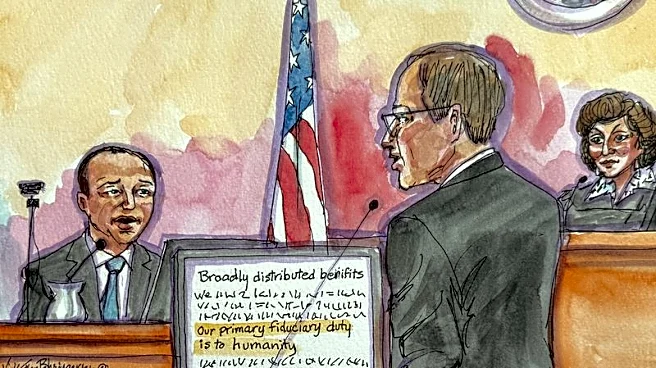
billion in damages and aims to restore OpenAI's nonprofit status while removing its current leaders, Sam Altman and Greg Brockman. During the trial, Musk's lawyer grilled Brockman over diary entries from 2017, where he contemplated the financial benefits of converting OpenAI to a for-profit model. Brockman defended his actions, stating that the shift was intended to further OpenAI's mission, despite personal financial gains. The trial also featured testimony from AI safety researcher Stuart Russell, who discussed potential risks associated with AI development.
Why It's Important?
This case underscores the complex dynamics between philanthropy and profit in the tech industry. Musk's allegations highlight concerns about transparency and ethical governance in organizations that transition from nonprofit to for-profit models. The outcome of this lawsuit could set a precedent for how tech companies manage such transitions and the accountability of their leaders. Additionally, the trial brings attention to the broader implications of AI development, as highlighted by Russell's testimony on potential societal risks. The case also reflects the growing scrutiny on tech giants and their influence over public and private sectors, potentially impacting regulatory approaches to AI and corporate governance.
What's Next?
The trial is expected to continue with further testimonies from key figures in the tech industry, including OpenAI's CEO Sam Altman and Microsoft's CEO Satya Nadella. The court's decision could influence future legal frameworks governing nonprofit-to-for-profit transitions and the responsibilities of tech leaders. Stakeholders in the tech industry, including investors and policymakers, will likely monitor the case closely, as its outcome could affect investment strategies and regulatory policies. The trial may also prompt discussions on ethical standards and transparency in tech philanthropy and corporate governance.
Beyond the Headlines
Beyond the immediate legal and financial implications, this case raises ethical questions about the responsibilities of tech leaders in balancing profit motives with societal benefits. The trial could lead to increased calls for transparency and accountability in tech philanthropy, particularly in how donations are used and the long-term intentions of nonprofit organizations. It also highlights the potential for conflicts of interest when tech companies transition to for-profit models, emphasizing the need for clear governance structures and ethical guidelines. The case may influence public perception of tech leaders and their commitment to societal welfare.