





What's Happening?
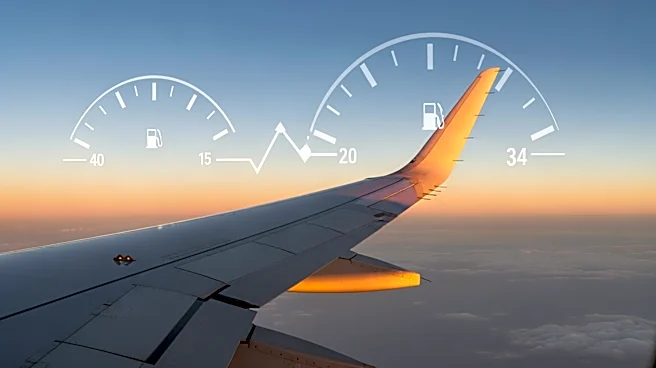
Airlines are experiencing significant pressure due to rising fuel costs, driven by renewed tensions between the U.S. and Iran. This geopolitical situation has led to increased energy prices, causing concerns among investors about the potential impact
on consumer travel. Major U.S. airlines, including American Airlines, Delta Air Lines, and United Airlines, saw their stock prices drop by more than 2% in premarket trading. JetBlue Airways also experienced a decline, shedding 1.2%. The rising fuel costs are part of a broader trend affecting various sectors, with energy stocks like APA, Coterra Energy, and ConocoPhillips seeing gains due to the same tensions.
Why It's Important?
The increase in fuel costs poses a significant challenge for the airline industry, which is already grappling with post-pandemic recovery efforts. Higher operational costs could lead to increased ticket prices, potentially reducing consumer demand for air travel. This situation could also impact the broader travel and tourism industry, which relies heavily on affordable and accessible air travel. Additionally, the rising energy prices are affecting other sectors, such as cruise lines and metal industries, indicating a ripple effect across the economy. Investors and businesses are closely monitoring these developments, as prolonged tensions could lead to sustained economic impacts.
What's Next?
If tensions between the U.S. and Iran continue, airlines may need to implement further cost-cutting measures or adjust their pricing strategies to maintain profitability. This could include reducing flight frequencies or routes, which would impact consumer choices and travel plans. Additionally, the industry may lobby for government intervention or support to mitigate the impact of rising fuel costs. Stakeholders will be watching for any diplomatic developments that could ease tensions and stabilize energy prices.