






What's Happening?
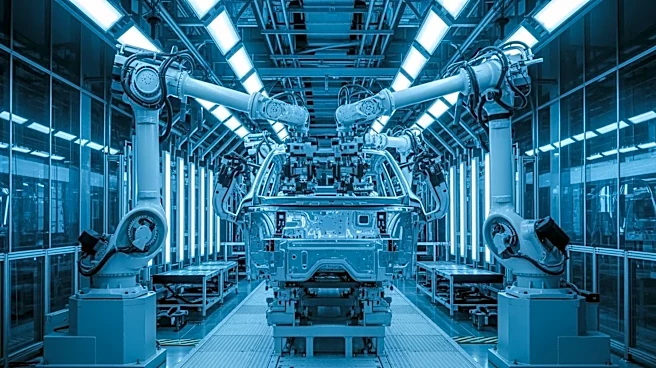
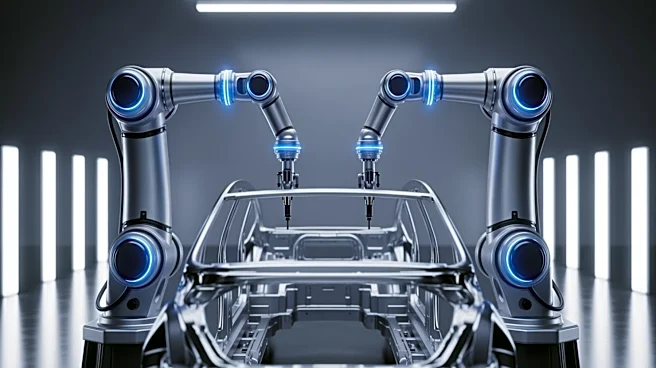
GFT Technologies has introduced AI-driven robotic arms designed to improve efficiency in automotive manufacturing by moving beyond mere anomaly detection to actively removing defective parts from production lines. This innovation addresses a longstanding
challenge in the industry: the gap between identifying defects and taking corrective action. The Stuttgart-based company, which has a history of providing digital transformation solutions, has partnered with Google Cloud to integrate AI into manufacturing processes, thereby modernizing systems and enhancing operational data utilization. The new robotic arms are capable of inspecting, marking, and removing defective components, thus reducing human intervention and potential errors. This development is part of GFT's broader strategy to apply AI in practical, real-world manufacturing settings, leveraging its expertise in systems integration and manufacturing workflows.
Why It's Important?
The introduction of AI-powered robotic arms by GFT Technologies is significant for the automotive industry as it promises to reduce costs associated with defective products and recalls. By automating the detection and removal of faulty parts, manufacturers can maintain high production speeds while ensuring quality, thus minimizing financial losses. This technology also represents a step towards the democratization of AI in manufacturing, allowing non-experts to utilize advanced AI tools. The collaboration with Google Cloud highlights the importance of strategic partnerships in advancing Industry 4.0 initiatives. As AI models become more efficient and require less customization, the potential for widespread adoption across various manufacturing sectors increases, potentially leading to a transformation in how factories operate.
What's Next?
As GFT Technologies continues to refine its AI models and robotic systems, the company is likely to expand its offerings to other sectors beyond automotive manufacturing. The success of these robotic arms in real-world applications could encourage other manufacturers to adopt similar technologies, further integrating AI into production processes. Additionally, the ongoing partnership with Google Cloud suggests future developments in AI-driven manufacturing solutions. Stakeholders in the industry, including other technology providers and manufacturers, may respond by forming similar alliances to remain competitive. The focus will likely be on enhancing AI capabilities to handle more complex tasks and further reduce the need for human intervention in quality control processes.
Beyond the Headlines
The deployment of AI-powered robotic arms in manufacturing raises important considerations regarding the future of work and the role of human labor in automated environments. While these technologies can increase efficiency and reduce costs, they may also lead to job displacement for workers traditionally involved in quality control and assembly line tasks. Ethical considerations around the use of AI in decision-making processes, particularly in safety-critical industries like automotive manufacturing, will need to be addressed. Furthermore, as AI systems become more integrated into manufacturing, issues related to data privacy and security will become increasingly important, necessitating robust measures to protect sensitive operational data.