
What's Happening?
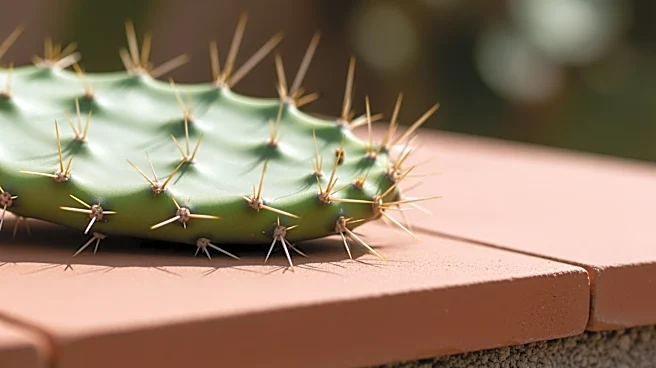
Researchers from the University of Bath's Department of Mechanical Engineering are investigating the use of agricultural waste from prickly pear cactus plants as a low-cost, low-carbon reinforcement for construction
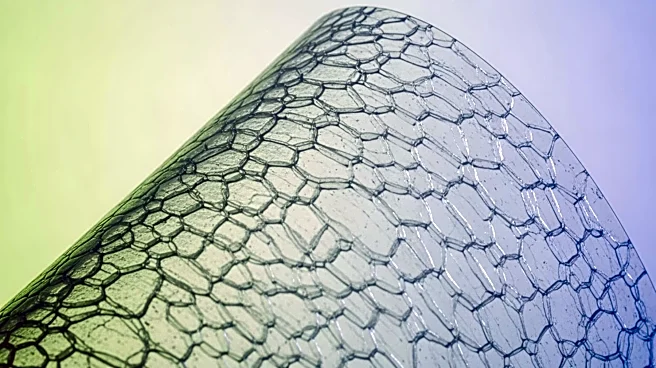
materials. The study focuses on extracting natural fibre networks from the cactus pads, which form a honeycomb-like structure. These fibres are being tested for their potential to reinforce bio-based composites, offering a renewable and biodegradable alternative to synthetic fibres. The research aims to develop sustainable composite materials that can be used in lightweight, low-load applications such as non-load-bearing wall panels and automotive interior components.
Why It's Important?
This research is crucial as it explores the use of agricultural waste to create sustainable building materials, addressing environmental concerns associated with traditional composites. By utilizing natural fibres from prickly pear cactus, the study offers a solution that reduces the carbon footprint of construction materials. The approach not only provides a sustainable alternative but also promotes the use of regionally sourced materials, potentially leading to increased adoption of natural materials in civil engineering. This could result in significant environmental benefits, including reduced land use, water demand, and pesticide use associated with traditional plant-based fibres.
What's Next?
The research team plans to further explore how these cactus fibres bond with common construction polymers and assess their full mechanical performance. This ongoing research is part of a broader program on sustainable composite materials, aiming to support the transition to lower-carbon construction. The team is also investigating scalable manufacturing routes for these bio-based systems, which could lead to new opportunities for collaboration and innovation in sustainable materials and engineering.