







What's Happening?
Flexible workspaces, once considered a temporary solution for startups, are now integral to the growth strategies of many U.S. companies, according to new data from WeWork. The study, which analyzed over 9,000 startups and small-to-medium-sized businesses
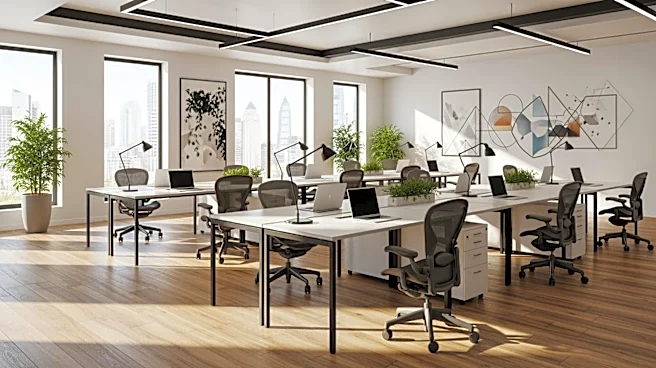
across 146 U.S. locations, found that 96% of these companies have either maintained or expanded their workspace footprint after joining flexible office spaces. This trend reflects a broader shift in the digital economy, where physical space is viewed as a variable resource that can scale with a company's needs. The U.S. coworking market has grown by 17% year-on-year, with major hubs like San Francisco, New York, and Los Angeles leading the expansion. Flexible workspaces offer short-term commitments and shared services, making them attractive to startups in volatile funding environments.
Why It's Important?
The rise of flexible workspaces is significant as it highlights a transformation in how startups operate within the digital economy. By providing scalable and cost-effective solutions, these spaces allow startups to manage cash flow more effectively, especially in uncertain economic conditions. This model supports the decentralization of business operations, enabling companies to expand into new markets without the burden of long-term leases. As startups increasingly rely on intangible assets like data and intellectual property, flexible workspaces serve as collaboration hubs rather than traditional production sites. This shift is crucial for startups navigating multiple funding cycles and seeking to remain agile in a competitive market.
What's Next?
As the trend towards flexible workspaces continues, it is likely that more startups will adopt this model to support their growth and expansion strategies. The ongoing integration of remote and hybrid work practices will further drive demand for these spaces, as companies seek to accommodate a mix of in-office and remote arrangements. Additionally, the economic uncertainty and pressure to manage costs will reinforce the appeal of flexible workspaces as a strategic advantage. This evolution may lead to further innovations in how physical space is utilized within the digital economy, potentially influencing traditional real estate models.
Beyond the Headlines
The shift towards flexible workspaces also raises questions about the future of traditional office spaces and their role in the business landscape. As companies prioritize flexibility and scalability, the demand for permanent headquarters may decline, prompting a reevaluation of real estate investments. This trend could also impact urban planning and the development of business districts, as the need for large, centralized office buildings diminishes. Furthermore, the cultural implications of distributed workforces and the reimagining of office environments may influence workplace dynamics and employee expectations.