




What's Happening?
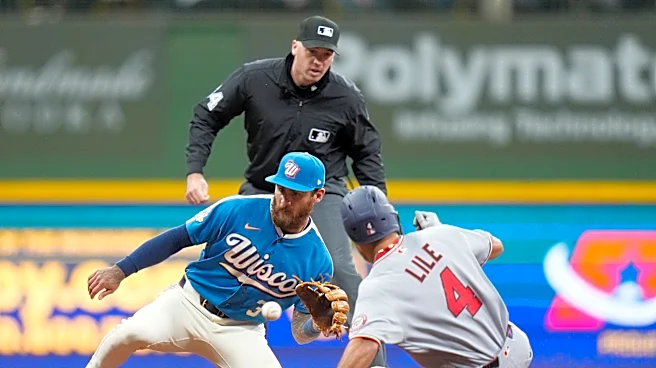
During a game between the Pittsburgh Pirates and the Washington Nationals, a controversial play involving Pirates' shortstop Konnor Griffin led to a significant impact on the game's outcome. Griffin fielded a groundball with the bases loaded and attempted
to reach second base himself. Despite appearing to reach the base before the runner in slow-motion replay, the runner was called safe. Griffin's subsequent throw to first base was errant, allowing three runs to score. The Pirates challenged the call, but the review upheld the decision. Additionally, the sliding Nationals player, Nasim Nunez, seemed to interfere with Griffin's throw by hitting him with his arm, yet no interference was called. The play resulted in a 4-0 lead for the Nationals, despite the Pirates' belief that the ruling was unjust.
Why It's Important?
This incident highlights the complexities and potential inconsistencies in MLB's rules regarding runner interference and replay reviews. The decision not to call interference or overturn the safe call has implications for the Pirates, who lost a chance to prevent multiple runs from scoring. Such rulings can affect team standings and player morale, emphasizing the need for clear and consistent application of rules. The Pirates' frustration reflects broader concerns within the league about the effectiveness of replay systems and the interpretation of interference rules, which can influence game outcomes and team strategies.
What's Next?
The Pirates may seek clarification from MLB on the interference rule and its application, potentially advocating for changes to ensure fair play. The team will need to regroup and focus on upcoming games to recover from the setback. MLB might review the incident to assess the effectiveness of current rules and consider adjustments to improve fairness and accuracy in officiating. Fans and analysts will likely continue to debate the play, influencing discussions on rule changes and the role of technology in sports.