


What's Happening?
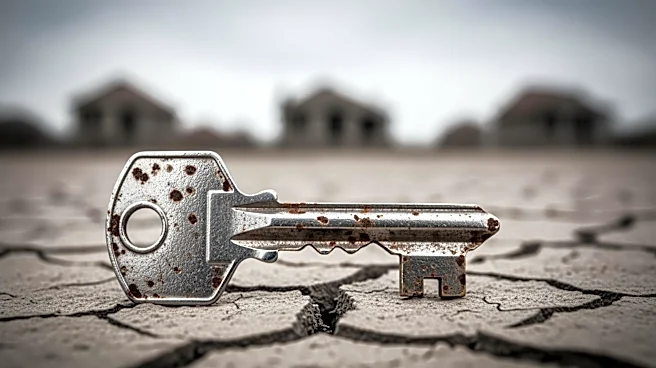
Foreclosure activity in the United States has seen a significant increase, with a 42% rise in completed foreclosures in April compared to the same period last year. According to data from property firm ATTOM, 5,098 foreclosures were completed, highlighting
the financial strain on homeowners due to high mortgage rates and persistent housing costs. The report indicates that 42,430 properties had some form of foreclosure filing, marking an 18% increase from the previous year. Delaware recorded the highest foreclosure rate, with one in every 1,739 housing units affected, followed by South Carolina and Florida. The number of foreclosure starts also rose by 12% annually, with Florida, Texas, and California leading in the number of new foreclosure processes initiated.
Why It's Important?
The rise in foreclosure rates is a critical indicator of the financial challenges facing many American homeowners. Elevated borrowing costs and housing affordability issues are contributing to increased financial distress, potentially leading to a broader impact on the housing market and economy. The increase in foreclosure activity suggests that lenders are addressing distressed inventory, which could have long-term implications for housing stability and economic recovery. Homeowners in states with high foreclosure rates, such as Delaware, South Carolina, and Florida, are particularly vulnerable, and the trend may signal a need for policy interventions to address housing affordability and financial support for affected individuals.
What's Next?
As foreclosure rates continue to rise, stakeholders, including policymakers and financial institutions, may need to consider measures to mitigate the impact on affected homeowners. Potential actions could include revisiting mortgage lending practices, offering financial assistance programs, or implementing policies to improve housing affordability. Monitoring the trend in foreclosure activity will be crucial to understanding the broader economic implications and ensuring that appropriate support mechanisms are in place to prevent further financial distress among homeowners.