
What's Happening?
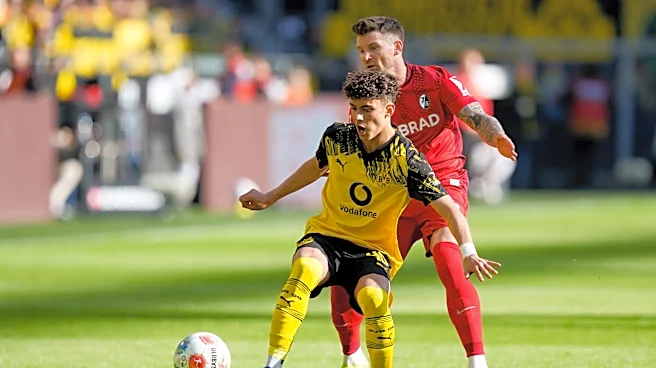
Mathis Albert, a 16-year-old American soccer player, made his debut for Borussia Dortmund in a Bundesliga match against Freiburg, setting a new record as the youngest American to play in the league. Albert, who
was born in Greenville, South Carolina, entered the game at 16 years, 11 months, and five days old, surpassing the previous record held by Giovanni Reyna. His debut is part of a broader trend of young American players making their mark in European soccer. Albert's journey began in the LA Galaxy's youth system, and he has attracted interest from major European clubs due to his dual citizenship and family relocation to Germany. His debut has generated significant excitement among American soccer fans, eager for a global superstar from the U.S.
Why It's Important?
Albert's debut underscores the increasing presence and potential of American players in top European soccer leagues. This development is significant for U.S. soccer, which has long sought a global superstar to elevate the sport's profile domestically and internationally. The success of young players like Albert could inspire more American talent to pursue careers in Europe, potentially leading to a stronger U.S. national team. Additionally, it highlights the effectiveness of youth development programs in the U.S. and the growing interest of European clubs in American players. This trend could lead to more investment in soccer infrastructure and training in the U.S., further enhancing the country's competitiveness on the global stage.
What's Next?
As Albert continues to develop at Borussia Dortmund, his progress will be closely watched by both American and international soccer communities. His performance could influence the strategies of U.S. soccer academies and the national team, potentially leading to more American players being scouted by European clubs. The U.S. soccer community will likely continue to support and promote young talents like Albert, hoping to produce a world-class player who can compete at the highest levels. Additionally, Albert's success may encourage other young American players to seek opportunities abroad, further integrating U.S. soccer into the global ecosystem.
Beyond the Headlines
Albert's debut also raises questions about the pressures and expectations placed on young athletes, particularly those seen as potential superstars. The hype surrounding his debut reflects a broader cultural obsession with identifying and promoting the 'next big thing' in sports. This phenomenon can lead to intense scrutiny and pressure on young players, which may impact their development and well-being. As American soccer continues to grow, it will be important to balance the excitement of discovering new talent with the need to support and nurture young athletes in a healthy and sustainable way.