
What's Happening?
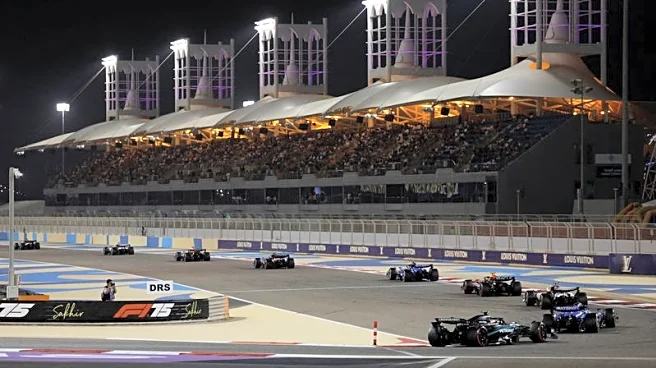
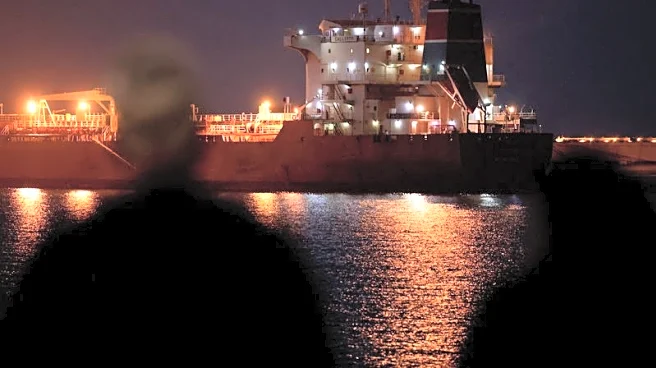
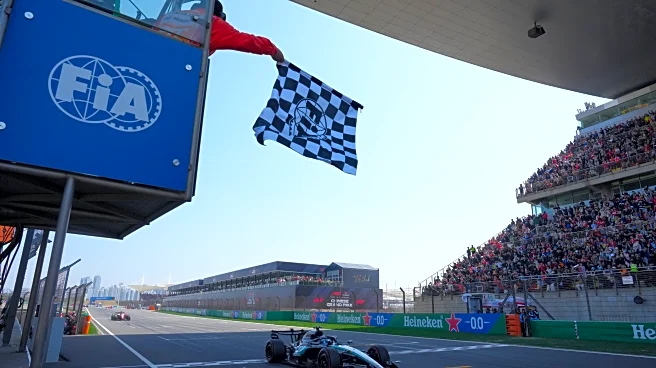
Formula One has announced the cancellation of its scheduled races in Bahrain and Saudi Arabia due to safety concerns arising from the ongoing conflict involving Iran. The decision was made in light of recent retaliatory attacks by Iran following strikes
by the United States and Israel. The races, initially set for April, have been removed from the calendar without immediate plans for rescheduling. This marks a significant disruption in the F1 season, which now faces a five-week gap between the Japanese Grand Prix and the Miami Grand Prix.
Why It's Important?
The cancellation of these races underscores the impact of geopolitical tensions on international sporting events. It highlights the challenges faced by global sports organizations in ensuring the safety of participants and spectators amidst regional conflicts. The decision also affects the economic landscape, as these events contribute significantly to local economies through tourism and international exposure. The absence of these races may lead to financial losses for stakeholders, including local businesses and the F1 organization. Additionally, it raises questions about the future of sporting events in politically volatile regions.
What's Next?
While the races have been cancelled, the possibility of rescheduling remains open, depending on the resolution of the conflict. F1 and the FIA will continue to monitor the situation closely, with safety as their primary concern. The decision also places pressure on other international sporting bodies to reassess their event locations and safety protocols. Stakeholders, including teams and sponsors, will likely engage in discussions to mitigate the financial and logistical impacts of these cancellations.