





What's Happening?
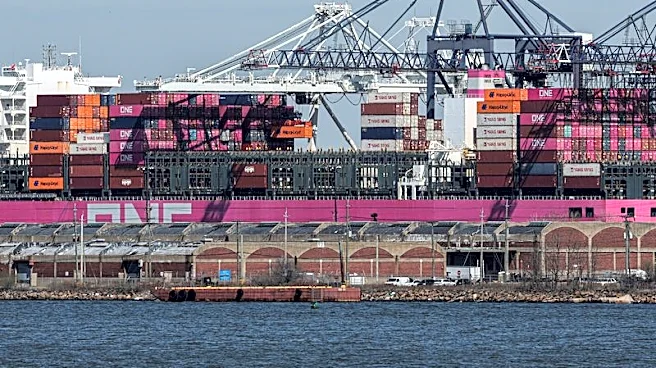
The National Retail Federation (NRF) has reported that import volumes at major U.S. ports are expected to remain below last year's levels into early fall, influenced by economic and geopolitical uncertainties. The Global Port Tracker report indicates
a projected decline in inbound cargo volumes from July through September, following a temporary increase in May and June due to favorable comparison points from the previous year. Factors such as rising inflation, falling consumer confidence, and geopolitical tensions, particularly the conflict in Iran, are contributing to the cautious approach by retailers in building up inventories.
Why It's Important?
The anticipated decline in import volumes reflects broader economic challenges, including supply chain disruptions and shifting trade dynamics. This trend could impact various sectors reliant on imported goods, potentially leading to supply shortages and increased costs for consumers. Retailers may need to adopt more flexible and diversified sourcing strategies to mitigate these challenges. The situation underscores the interconnectedness of global trade and the need for resilience in supply chain management.
What's Next?
As the economic landscape remains uncertain, retailers and importers will likely continue to monitor geopolitical developments and adjust their strategies accordingly. The NRF's projections suggest that import volumes may stabilize or improve if economic conditions become more favorable. However, ongoing geopolitical tensions and trade policy changes could further influence import trends and necessitate adaptive measures by businesses.