



What's Happening?
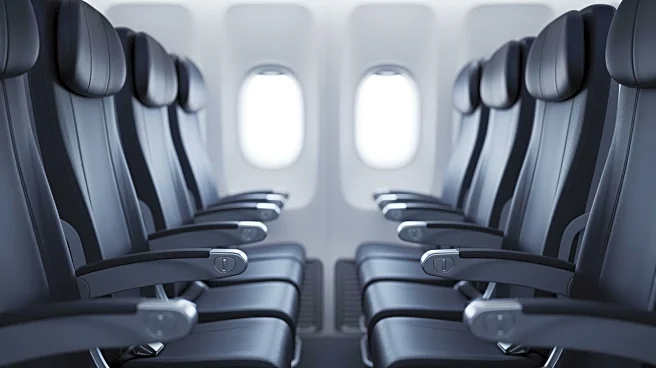
WestJet, a Canadian airline, has decided to pause the rollout of non-reclining seats across its Boeing 737 aircraft following significant backlash from employees. The airline had begun implementing these fixed-position seats in October, with plans to reconfigure 43 planes. However, due to criticism regarding health and safety concerns, WestJet announced it would halt further reconfiguration after December 15 to ensure aircraft availability during the peak winter travel season. The decision comes as the airline monitors guest feedback and assesses the operational performance of the reconfigured aircraft. Despite some passengers preferring the fixed design to avoid encroachment, the design has faced criticism from airline workers, including pilots,
who are concerned about reduced legroom and its impact on health and safety.
Why It's Important?
The decision by WestJet to pause the rollout of non-reclining seats highlights ongoing debates about passenger comfort and safety in the airline industry. The backlash underscores the importance of ergonomic considerations in seat design, as studies have shown that increased body mass and stature over the years necessitate more legroom and seat width. The controversy also reflects broader industry challenges in balancing cost efficiency with passenger satisfaction. The move could influence other airlines considering similar changes, as it raises questions about the trade-offs between maximizing passenger capacity and ensuring comfort and safety.
What's Next?
WestJet plans to resume the rollout of the new seat configuration in the spring, after gathering more feedback from guests and employees. The airline will continue to monitor the performance of the reconfigured aircraft and may make adjustments based on the feedback received. Meanwhile, pilots and other employees may pursue grievances if the seating arrangements are deemed to impact their health and safety negatively. The situation could lead to further discussions within the airline industry about the standards for economy class seating and the potential need for regulatory intervention.