



What's Happening?
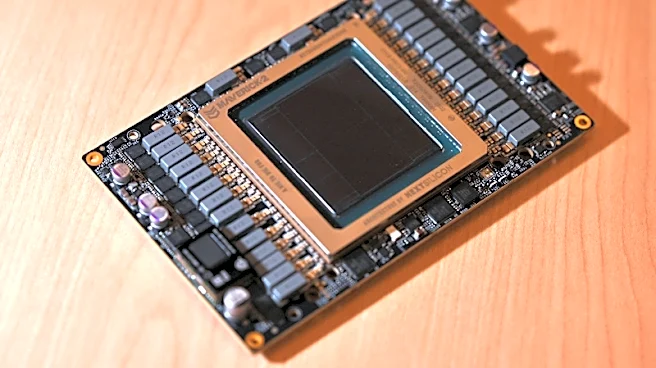
AMD has announced the production ramp-up of its first 2 nm CPUs, marking a significant advancement in semiconductor technology. These chips, part of the AMD EPYC processor line codenamed Venice, are being produced in Taiwan using TSMC's advanced 2 nm process technology. AMD plans
to extend production to TSMC's Arizona facility in the future. The Venice processors are based on AMD's next-generation Zen 6 architecture, which will also be used in upcoming desktop CPUs, potentially branded as the Ryzen 10000 Series. This move to the 2 nm node is notable as AMD is largely bypassing the 3 nm node, which has seen limited use in its current product lineup. Meanwhile, Intel has teased the development of future 10A and 7A nodes, although these remain speculative at this stage. Intel's current most advanced offering is the Panther Lake CPUs, built on the 18A node.
Why It's Important?
The production of 2 nm CPUs by AMD represents a major leap in chip technology, potentially enhancing computing power and efficiency significantly. This development could have wide-ranging impacts on industries reliant on high-performance computing, such as data centers and AI applications. For consumers, this could translate into more powerful and efficient personal computing devices. Intel's roadmap hints at continued innovation in semiconductor technology, which is crucial for maintaining competitiveness in the global tech market. The advancements in chip technology are also indicative of the ongoing relevance of Moore's Law, suggesting that significant progress in transistor density and performance is still achievable.
What's Next?
AMD's Zen 6 architecture is expected to launch in 2026, with initial releases likely focusing on EPYC server processors. Desktop models are anticipated to follow in early 2027. Intel's future nodes, while speculative, suggest a long-term commitment to advancing chip technology, with the 14A node expected to enter volume production by 2029. These developments will likely spur further competition between AMD and Intel, driving innovation and potentially leading to more rapid advancements in semiconductor technology.