


What's Happening?
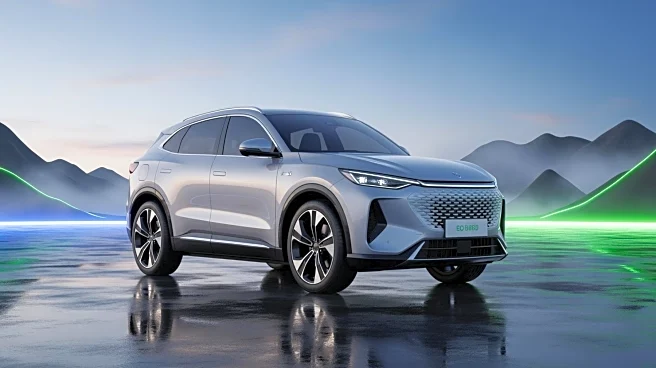
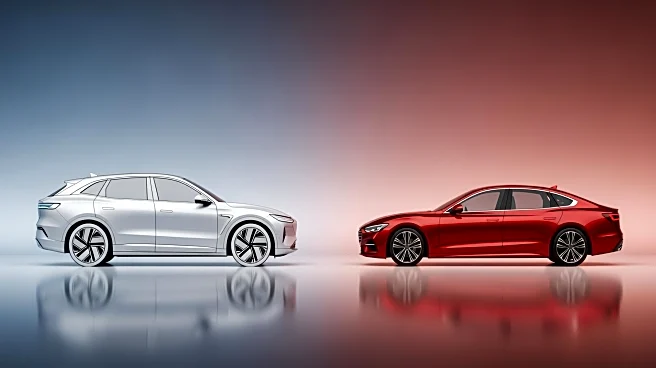
The U.S. electric vehicle (EV) market is heavily dominated by SUVs, with 70% of all battery electric vehicle (BEV) sales falling into this category. In contrast, the Chinese market shows a significant preference for sedans, which account for 42% of BEV sales.
This trend highlights the differing consumer preferences between the two major markets. The European market, meanwhile, has seen a shift from smaller A- and B-segment models to larger C- and D-segment vehicles over the past five years. This shift has been accompanied by a 251% increase in the overall BEV market in Europe. The dominance of midsize models in the U.S. is largely attributed to the popularity of Tesla's Model 3 and Model Y, which together account for nearly half of the market.
Why It's Important?
The preference for larger vehicles in the U.S. market reflects broader consumer trends and has implications for domestic and international automakers. U.S. manufacturers focusing on midsize and full-size categories may face challenges when exporting to markets where smaller vehicles are more popular. This could limit their competitiveness in regions like Southeast Asia and Latin America, where Chinese manufacturers currently dominate. The shift in consumer preferences also impacts the types of vehicles that automakers prioritize for development and production, potentially influencing the overall direction of the EV industry.
What's Next?
As the global EV market continues to evolve, automakers may need to adapt their strategies to cater to varying regional preferences. U.S. manufacturers might consider expanding their offerings in smaller vehicle segments to capture a larger share of international markets. Additionally, the ongoing development of new models and technologies could further influence consumer preferences and market dynamics. The increasing focus on sustainability and emissions reduction may also drive changes in vehicle design and production priorities.