






What's Happening?
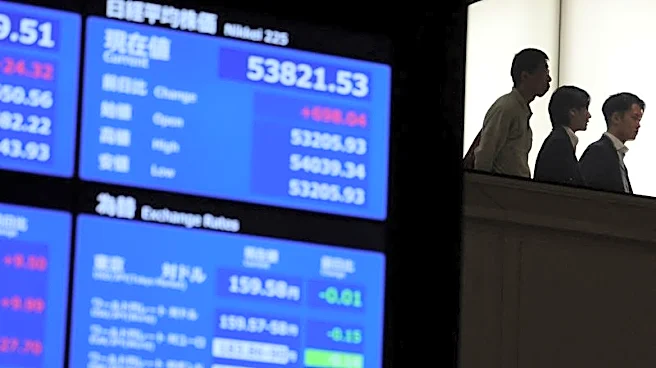
The stock market experienced a significant rebound following a ceasefire agreement between the United States and Iran. This development led to a 16% drop in oil prices, marking the largest decrease since 2020. The ceasefire has eased tensions that previously
contributed to market volatility. The reduction in oil prices is expected to lead to lower gas prices, providing potential relief to consumers. The ceasefire is seen as a temporary de-escalation in the ongoing conflict, with both nations agreeing to a two-week pause in hostilities.
Why It's Important?
The rebound in the stock market and the drop in oil prices are significant for the U.S. economy. Lower oil prices can reduce transportation and production costs, potentially leading to lower consumer prices and increased disposable income. This can stimulate economic activity and consumer spending. The ceasefire also reduces geopolitical risks that have been a source of uncertainty for investors. However, the temporary nature of the ceasefire means that the situation remains fragile, and any resurgence in conflict could reverse these economic gains.
What's Next?
The two-week ceasefire provides a window for diplomatic efforts to achieve a more lasting resolution. Stakeholders, including political leaders and international organizations, may push for negotiations to extend the ceasefire or reach a more permanent agreement. The financial markets will likely remain sensitive to developments in U.S.-Iran relations, with investors closely monitoring any signs of renewed tensions. The potential for further de-escalation could lead to continued market stability and economic benefits.