


What's Happening?
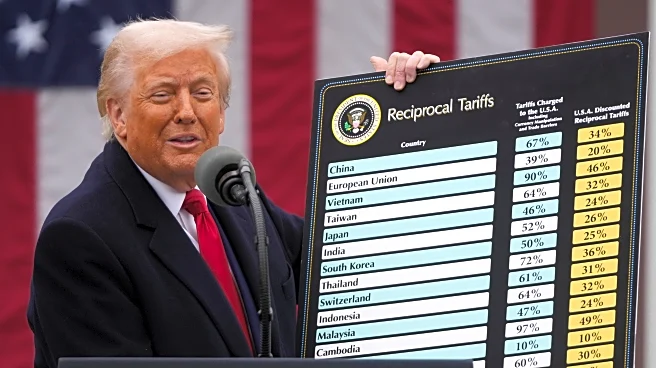
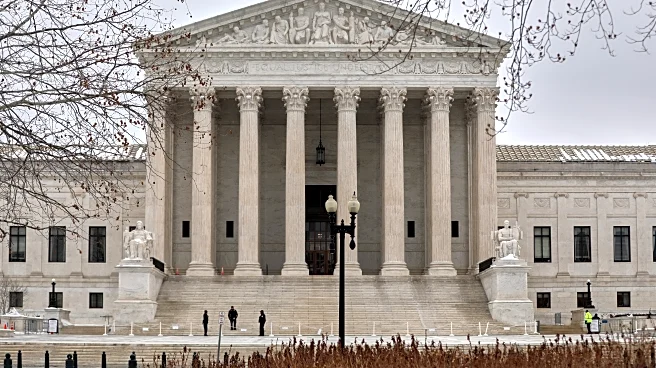
The Supreme Court of the United States has ruled in a landmark decision that the International Emergency Economic Powers Act (IEEPA) does not authorize the President to impose tariffs on imported goods. This ruling, delivered in the case of Learning Resources, Inc. v. Trump, invalidates billions of dollars in tariffs that were imposed under the IEEPA, potentially unlocking $175 billion in refunds for U.S. importers. The decision marks a significant check on executive authority, emphasizing that Congress must clearly authorize such economic measures. The ruling affects both targeted tariffs on imports from countries like Canada, Mexico, and China, as well as broader tariffs affecting multiple countries.
Why It's Important?
This Supreme Court decision has profound
implications for U.S. trade policy and executive power. By invalidating the tariffs, the ruling not only offers a substantial financial windfall for U.S. importers but also shifts the landscape of trade enforcement. The decision underscores the necessity for congressional involvement in imposing tariffs, potentially leading to a more stable but slower-moving trade policy environment. This could affect ongoing and future trade negotiations, as the U.S. government may need to rely on alternative mechanisms such as Section 232 national security tariffs or Section 301 unfair trade practice measures.
What's Next?
Following the ruling, the U.S. administration is expected to explore alternative trade enforcement mechanisms. The President has indicated plans to implement a global 10% tariff under Section 122 authority, demonstrating a commitment to maintaining tariff-based trade enforcement. Additionally, numerous bills are pending in Congress to codify various tariff measures into statute, reflecting a potential increase in the legislative branch's role in trade policy. For businesses, the focus will be on navigating the refund process and adjusting to the new trade compliance landscape.