




What's Happening?
Rodriques Johnpeter, a global industry segment manager at Harting, discusses the current challenges faced by manufacturers due to supply chain volatility, inflationary pressures, and labor constraints. These issues are compounded by the push to integrate
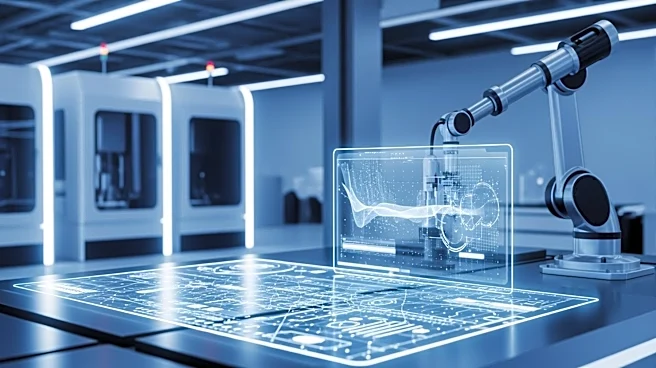
automation and AI into factories that were not originally designed for such technologies. Many manufacturing facilities are brownfield sites with legacy machines and fragile integrations, making it difficult to implement digital transformation strategies. Despite these challenges, there is evidence that automation and AI can lead to significant gains on the shop floor. Manufacturers are investing in technologies like supply chain digital twins and modular components that can be integrated with existing equipment without extensive rewiring or shutdowns. This approach allows for cost reductions and efficiency improvements by optimizing scheduling, maintenance, and capacity decisions.
Why It's Important?
The emphasis on execution over innovation is crucial for manufacturers navigating the current industrial landscape. By focusing on practical, incremental upgrades rather than complete overhauls, manufacturers can achieve tangible improvements in efficiency and cost-effectiveness. This strategy is particularly important in an environment where extended downtime is not feasible. The use of digital twins and modular infrastructure allows manufacturers to test changes and optimize processes in a virtual environment, reducing the risk of disruptions. This approach not only addresses immediate operational challenges but also positions manufacturers to better handle future disruptions, thereby maintaining competitiveness in a volatile market.