


What's Happening?
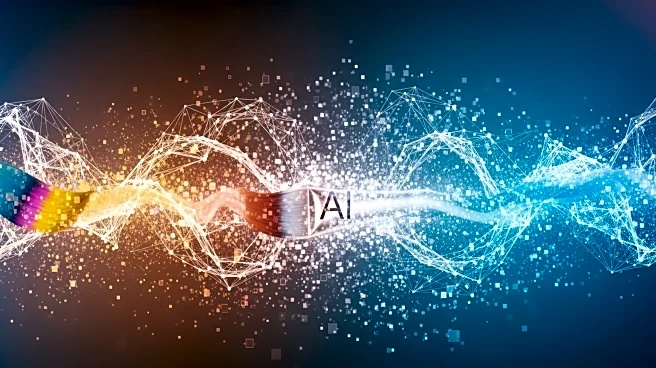
Harmony Korine, known for his work on films like 'Gummo' and 'Spring Breakers', is shifting his focus from traditional cinema to exploring the potential of artificial intelligence (AI) in art. Korine, who has not read a book in decades and finds current cinema uninteresting, is now engaged in creating what he describes as 'digital drugs' through AI-driven immersive projects. His recent work includes a short-form piece set in the Miami Design District, featuring surreal imagery like astronauts and shapeshifting cats. Korine's studio, EDGLRD, is collaborating with GenAI firm Runway to further explore AI technology. Despite criticism from some filmmakers who view AI as merely regurgitative, Korine believes it holds the potential to transcend traditional narrative
forms and create new, experiential art.
Why It's Important?
Korine's embrace of AI as an art form highlights a significant shift in the creative industry, where technology is increasingly being used to push the boundaries of traditional media. This development could influence how art and entertainment are produced and consumed, potentially leading to new forms of storytelling that prioritize sensory and emotional experiences over conventional narratives. As AI technology continues to evolve, it may offer artists new tools to express their creativity, challenging existing paradigms and possibly reshaping the landscape of the entertainment industry. This shift could also impact the economic dynamics of the industry, as new forms of content creation and distribution emerge.
What's Next?
As Korine and other artists continue to explore AI's potential, the entertainment industry may see a growing integration of technology in artistic processes. This could lead to the development of new genres and formats that blend traditional and digital art forms. Stakeholders in the industry, including filmmakers, producers, and technology companies, may need to adapt to these changes by investing in AI research and development. Additionally, there may be discussions around the ethical implications of AI in art, such as issues of authorship and originality. The response from audiences and critics will also play a crucial role in determining the future trajectory of AI-driven art.