






What's Happening?
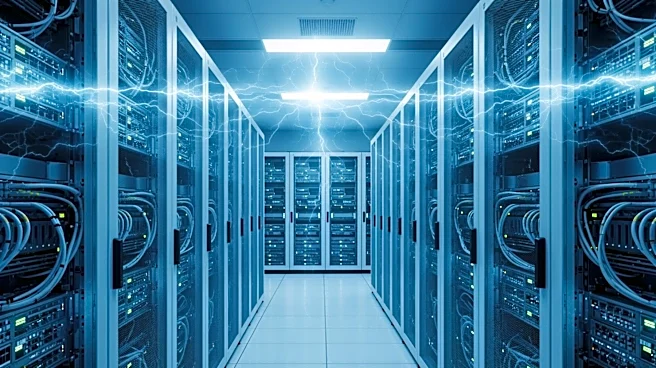
The rapid expansion of data centers in the United States is significantly increasing electricity demand, with projections indicating that server demand could reach between 446 and 818 billion kilowatt-hours by 2050. This growth is expected to account
for up to one-third of commercial electricity consumption. Currently, data centers consume about 4.4% of U.S. electricity, a figure that could rise to 12% by 2028. This surge is part of a broader trend where electricity is becoming a core input to economic growth, particularly in the digital economy. The U.S. is leading globally in data center capacity and deployment, hosting nearly 4,000 data centers, more than the next fourteen countries combined. This dominance is supported by lower electricity costs compared to Europe, where higher energy prices and regulatory complexities are hindering similar growth.
Why It's Important?
The increasing electricity demand from data centers highlights a critical shift in the U.S. economy towards digital infrastructure as a key growth driver. This trend underscores the importance of energy policy and infrastructure development in maintaining competitive advantages in the global tech landscape. The U.S. benefits from lower electricity costs, which attract investment and innovation, positioning it as a leader in the digital economy. Conversely, Europe's higher energy costs and regulatory hurdles are slowing its progress, potentially widening the gap in technological advancements and economic growth. This situation emphasizes the strategic importance of energy management and infrastructure investment in sustaining economic competitiveness.
What's Next?
As the demand for electricity continues to rise, the U.S. may need to further invest in expanding its power generation capacity and infrastructure to support the growing digital economy. This could involve policy adjustments to encourage sustainable energy practices and investments in renewable energy sources. Additionally, states like Colorado, which are focusing on quantum computing, may need to balance their energy strategies to accommodate both traditional and emerging technologies. The ongoing competition with Europe and other regions will likely drive further innovation and investment in energy-efficient technologies and infrastructure.