
What's Happening?
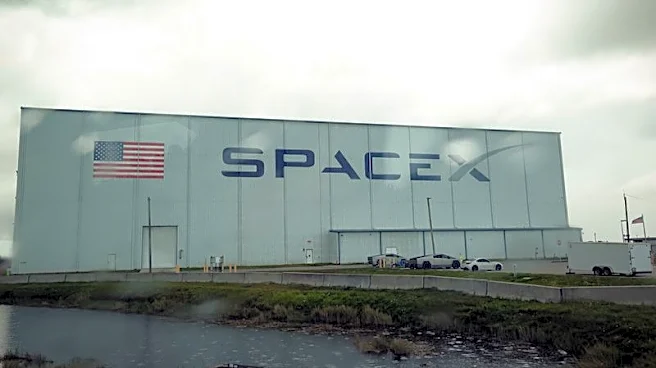
Elon Musk's Terafab AI chip project in Austin, Texas, is set to receive significant support from Intel. The American chipmaker announced its involvement in designing and constructing the facility, which
aims to supply AI chips to Musk's companies, SpaceX and Tesla. These chips are crucial for Musk's plans to develop self-driving cars, humanoid robots, and data centers. The partnership with Intel alleviates some of the pressure on Musk, who has expressed concerns about the chip-making industry's ability to meet demand. Intel's experience in chip fabrication is expected to accelerate the project's progress, with the goal of producing 1 terawatt of computing power annually.
Why It's Important?
The collaboration between Intel and Musk's Terafab project highlights the growing demand for AI chips in the tech industry. As AI applications expand, the need for advanced semiconductor technology becomes critical. This partnership could enhance the U.S. semiconductor manufacturing capabilities, reducing reliance on foreign producers like Taiwan Semiconductor Manufacturing Company. The project also represents a significant investment in domestic chip production, potentially boosting the U.S. economy and technological innovation. However, Intel's involvement comes amid its own challenges in completing other fabrication plants, raising questions about the timeline and feasibility of the Terafab project.
What's Next?
Intel's commitment to the Terafab project suggests a strategic move to strengthen its position in the AI chip market. The construction of the facility will likely involve substantial investment and collaboration with other tech companies. As the project progresses, stakeholders will be watching closely to see if Musk's ambitious plans materialize. The success of Terafab could influence future investments in semiconductor manufacturing and AI technology in the U.S. Additionally, the project may prompt other companies to explore similar initiatives, further driving innovation in the industry.