








What's Happening?
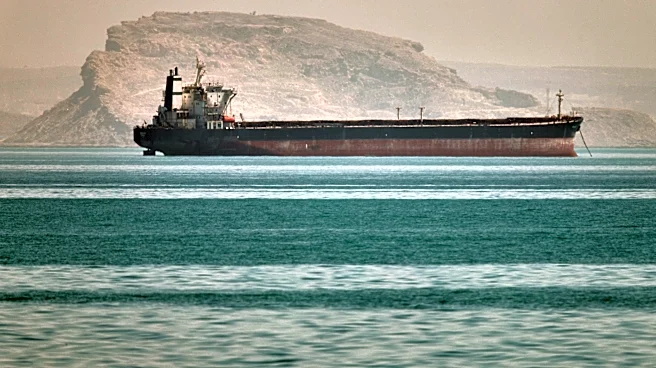
The global phosphate market is experiencing significant disruption due to ongoing constraints at the Strait of Hormuz, a critical passage for global supply. According to ICIS, the market is adjusting to tighter availability and elevated prices, with Moroccan
supply becoming increasingly pivotal. The disruption, initially perceived as a short-term shock, is now seen as a semi-permanent feature, forcing traders, producers, and distributors to adapt. European buyers are particularly affected, with no realistic substitutes for Moroccan phosphate in the near term. The market is witnessing demand destruction in key countries like Brazil and India, where high prices are leading to reduced phosphate use. The situation is compounded by logistical challenges and the high cost of alternative supply routes.
Why It's Important?
The disruption at the Strait of Hormuz has significant implications for global food security and agricultural productivity. As phosphate is a crucial component of fertilizers, its scarcity and high cost could lead to reduced agricultural yields, affecting food availability and prices worldwide. Countries heavily reliant on phosphate imports, such as Brazil and India, are already experiencing demand destruction, which could exacerbate food security issues. The market's reliance on Moroccan supply highlights vulnerabilities in global supply chains and the need for diversification. The situation underscores the importance of managing price and availability risks in tandem, as prolonged high prices could lead to long-term shifts in agricultural practices and food production.
What's Next?
If the disruption at the Strait of Hormuz persists, the phosphate market may see further adaptation in product strategy and demand behavior. Buyers might shift towards alternative phosphate products like triple superphosphate (TSP) and custom NPK formulas to maximize phosphorus use. There may also be increased reliance on Moroccan suppliers, as traditional suppliers like China and Saudi Arabia are less accessible. The market could witness significant demand destruction, particularly in regions unable to absorb the price shock, leading to potential food security challenges. Ongoing high prices could drive innovation in fertilizer use and nutrient management, with broader implications for global agriculture.
Beyond the Headlines
The current situation in the phosphate market highlights broader issues of supply chain resilience and the need for strategic diversification in critical commodities. The reliance on a few key suppliers and trade routes exposes markets to geopolitical and logistical risks, necessitating a reevaluation of global trade practices. The disruption also raises questions about the sustainability of current agricultural practices and the need for more efficient use of resources. As the market adapts, there may be opportunities for innovation in fertilizer technology and sustainable agriculture, potentially leading to more resilient food systems in the long term.