
What's Happening?
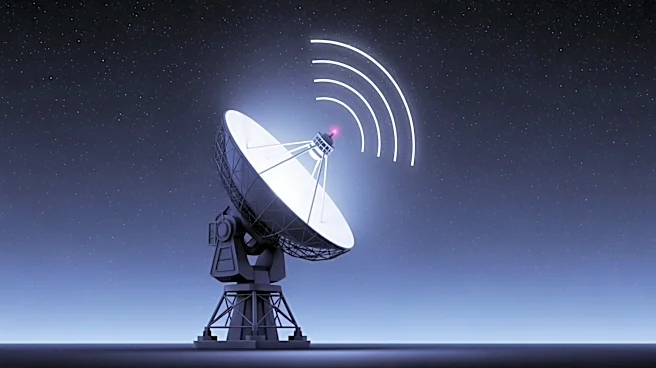
SpaceX, led by Elon Musk, is advancing its Starlink project into the mobile network sector by acquiring 65 megahertz of nationwide Direct-to-Device spectrum. This move, approved by the FCC, positions Starlink as
a potential major player in the U.S. wireless market. The company plans to leverage this spectrum to establish its own mobile network, bypassing traditional mobile network operators (MNOs). Starlink's strategy includes using its existing satellite infrastructure to provide mobile services, which could disrupt the current market dominated by established carriers like AT&T, Verizon, and T-Mobile. The acquisition is part of a broader plan to integrate satellite and cellular services, potentially offering a seamless mobile experience through its Gen2 platform, which aims to operationalize consumer-grade cellular voice services by 2027.
Why It's Important?
The entry of SpaceX's Starlink into the mobile network market could significantly alter the competitive landscape. By owning its spectrum, Starlink can offer mobile services independently, potentially reducing costs and increasing service coverage, especially in underserved areas. This development could lead to a shift in market dynamics, with traditional carriers facing increased competition. The potential for Starlink to capture a significant share of new mobile activations could compress the market value of existing carriers, while boosting SpaceX's valuation ahead of its anticipated IPO. The move also highlights the growing convergence of satellite and terrestrial communication technologies, which could lead to more integrated and efficient communication networks.
What's Next?
As SpaceX prepares for its IPO, the company is likely to continue expanding its satellite network and refining its mobile service offerings. The next steps include operationalizing the Gen2 platform and potentially forming partnerships or agreements with existing carriers to facilitate service integration. The market will be closely watching how traditional carriers respond, whether through competitive pricing, service enhancements, or strategic partnerships. The FCC's role in regulating and facilitating this new market entrant will also be crucial, as will consumer adoption and satisfaction with Starlink's mobile services.