

What's Happening?
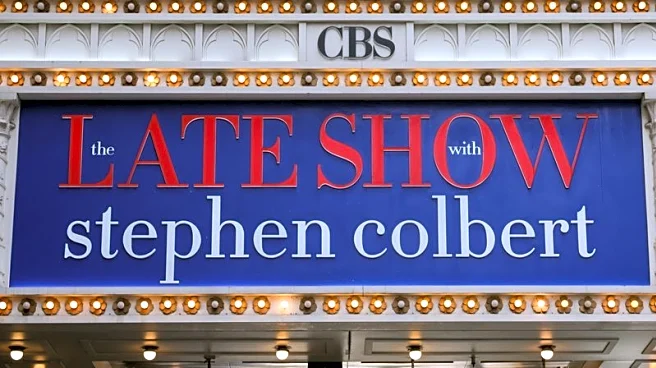
Stephen Colbert, host of 'The Late Show,' publicly criticized CBS for pulling an interview with Texas state Rep. James Talarico, a Democratic candidate for the U.S. Senate. Colbert claimed that CBS lawyers barred the interview due to concerns about violating the Federal Communications Commission's (FCC) 'equal time' rule, which mandates that broadcast networks provide equal airtime to political candidates. Colbert expressed his frustration on air, stating that the network's decision was influenced by guidance from the Trump administration. Despite the network's decision, Colbert conducted the interview and posted it on YouTube, circumventing the broadcast restrictions.
Why It's Important?
This incident highlights the ongoing tension between media outlets and regulatory
bodies over the interpretation and application of the FCC's 'equal time' rule. The rule, traditionally not applied to talk shows, is now being scrutinized under new guidance, potentially affecting how political content is broadcasted. The situation underscores the challenges media companies face in balancing regulatory compliance with editorial independence. It also raises questions about the influence of political administrations on media practices, particularly in the context of upcoming elections. The broader implications could affect how political discourse is managed on television, impacting public access to diverse political viewpoints.
What's Next?
The controversy may prompt further discussions within media companies about how to navigate FCC regulations while maintaining editorial freedom. It could also lead to legal challenges or calls for clearer guidelines from the FCC regarding the application of the 'equal time' rule to talk shows. Political candidates and media personalities might seek alternative platforms, such as online streaming, to bypass traditional broadcast restrictions. The incident could also influence future FCC policy decisions, especially if there is significant public or industry backlash against perceived censorship.