


What's Happening?
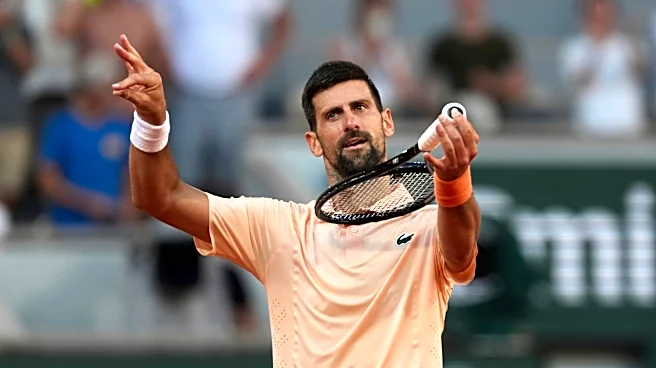
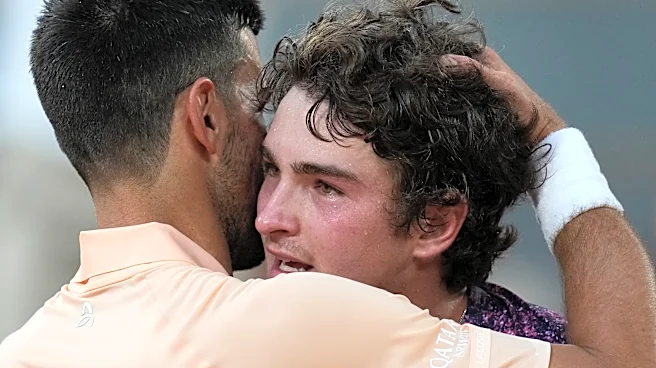
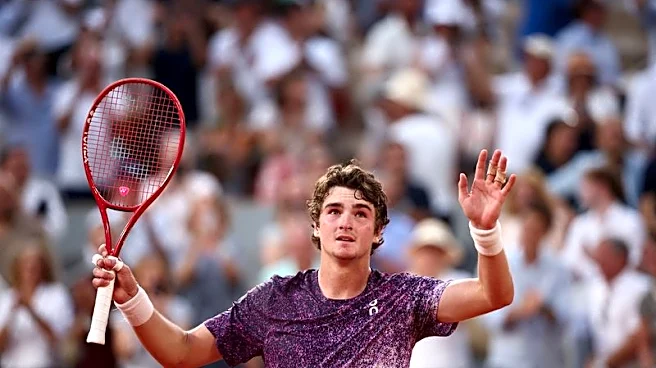
In a surprising turn of events at the 2026 French Open, Joao Fonseca defeated Novak Djokovic in the third round, marking a significant upset in the tournament. Djokovic, a seasoned player with three French Open titles, initially led the match by winning
the first two sets 6-4, 6-4. However, Fonseca, a 19-year-old rising star, mounted a comeback by taking the next three sets 6-3, 7-5, and 7-5. This victory propels Fonseca to the fourth round, his best performance in a Grand Slam to date. The defeat is notable for Djokovic, as it is the first time since 2009 that he has failed to advance past the third round at Roland Garros. The men's draw is now wide open, especially with the earlier exit of top-seed Jannik Sinner and the absence of Carlos Alcaraz due to injury.
Why It's Important?
The elimination of high-profile players like Djokovic and Sinner significantly alters the competitive landscape of the French Open. With these top contenders out, the tournament presents a unique opportunity for other players to advance further than expected. This shift could lead to unexpected outcomes and potentially new champions, impacting player rankings and the dynamics of future tournaments. For Djokovic, this loss highlights the challenges he faces at the French Open, historically his most difficult Grand Slam. The open field may also influence betting markets and fan engagement, as new narratives and rivalries emerge.
What's Next?
With the top seeds out, attention now turns to players like Alexander Zverev and Felix Auger-Aliassime, who remain in contention. Fonseca will face Casper Ruud in the next round, a match that could further define his burgeoning career. The tournament's progression will be closely watched to see if any other underdogs can capitalize on the absence of the usual favorites. Stakeholders, including sponsors and broadcasters, may adjust their strategies to highlight emerging talents and maintain audience interest.