
What's Happening?
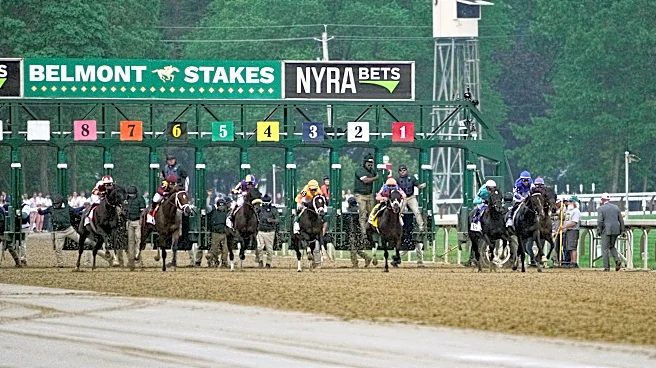
Chief Wallabee, a promising racehorse trained by Bill Mott, is set to compete in the 158th Belmont Stakes. After finishing fourth in the Kentucky Derby, Chief Wallabee has shown potential for a strong
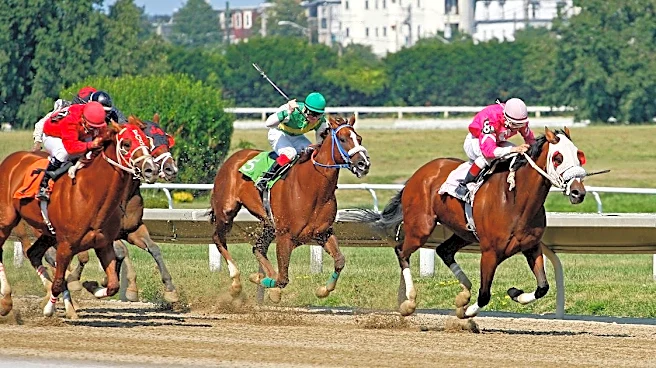
performance in the upcoming race. The horse has a career record of one win, one second, and one third place in four starts, with career earnings of $466,600. His best career Beyer Speed Figure is 100, achieved at the Fountain of Youth. Observers at Saratoga have noted his high energy levels during recent workouts, indicating that the Kentucky Derby did not exhaust him. The Belmont Stakes presents a more favorable pace scenario for Chief Wallabee, as there is no confirmed frontrunner, allowing him to potentially capitalize on a moderate pace.
Why It's Important?
The Belmont Stakes is a significant event in the horse racing calendar, and Chief Wallabee's performance could impact his future career trajectory. A strong showing could enhance his reputation and increase his value in the racing industry. The race also offers substantial financial incentives, with significant prize money at stake. For bettors and racing enthusiasts, Chief Wallabee's odds and performance history make him a horse to watch, potentially influencing betting patterns and strategies. The outcome of the race could also affect the standings and recognition of his trainer, Bill Mott, and jockey, Junior Alvarado, within the competitive horse racing community.
What's Next?
As the Belmont Stakes approaches, Chief Wallabee's team will focus on final preparations to ensure he is in peak condition for the race. The horse's post position, drawn just outside the expected pacesetter Powershift, is considered advantageous, allowing for a strategic stalking position. The race will test Chief Wallabee's ability to execute a well-timed move in the stretch, potentially overtaking competitors like Renegade and Golden Tempo. The outcome of the Belmont Stakes will determine Chief Wallabee's next steps in his racing career, including potential entries in future high-stakes races.