

What's Happening?
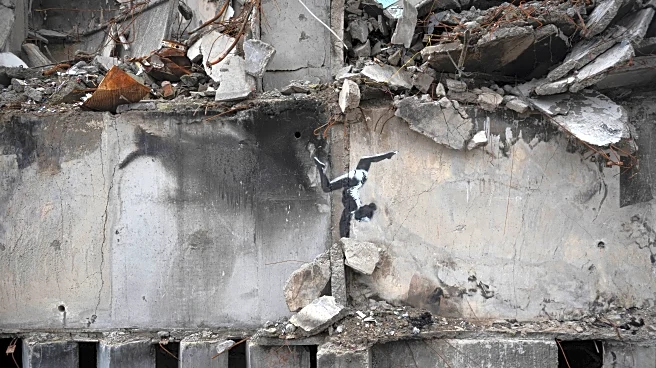
The renowned street artist Banksy has been identified as Robin Gunningham, a middle-aged man from Bristol, England, following an investigation by Reuters. This revelation, although long speculated, has sparked discussions about the implications for Banksy's
work and the broader art community. Banksy, known for his anonymous persona, has not confirmed or denied the report. The unmasking raises questions about the future of his art, which has been valued for its mystery and anonymity. Other artists, like Jerkface, emphasize the importance of anonymity in maintaining creative freedom and avoiding legal issues. The art world is now debating whether Banksy's work will retain its value and intrigue without the veil of mystery.
Why It's Important?
The unmasking of Banksy challenges the notion of anonymity in the art world, which has been a significant aspect of his and other artists' appeal. Anonymity allows artists to create without personal bias or legal repercussions, often enhancing the mystique and value of their work. Banksy's art, which has fetched millions at auctions, may see a shift in perception and value now that his identity is known. This development could influence how future artists approach anonymity and how the art market values such works. The revelation also highlights the tension between public curiosity and the artist's desire for privacy, potentially affecting how art is consumed and appreciated.
What's Next?
The art community will closely watch how Banksy's market value and creative output evolve following this revelation. Collectors and art enthusiasts may reassess the significance of his works now that the mystery is gone. Additionally, other anonymous artists might reconsider their stance on anonymity, weighing the benefits of remaining unknown against the potential for increased recognition and financial gain. The broader art market may also adjust its valuation criteria, considering the impact of an artist's identity on their work's appeal and marketability.
Beyond the Headlines
The unmasking of Banksy could lead to a broader cultural shift in how anonymity is perceived in creative fields. It raises ethical questions about the right to privacy versus public interest, especially in an era where personal branding is often crucial for success. This event might inspire discussions on the role of identity in art and whether the focus should be on the creator or the creation. The situation also underscores the potential for anonymity to serve as a form of resistance against commercial pressures and societal expectations, offering a unique lens through which to view artistic expression.