







What's Happening?
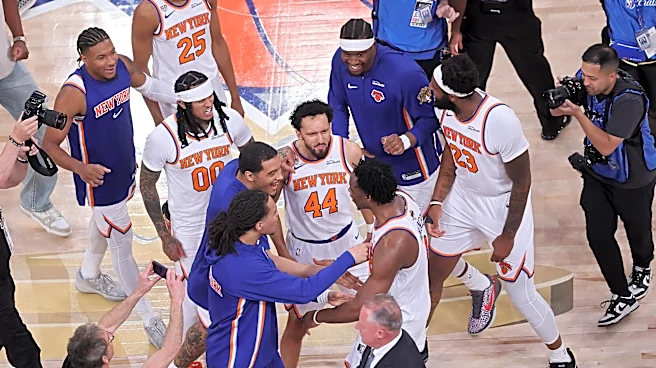
Jalen Brunson, the captain of the New York Knicks, has been recognized as one of the least efficient NBA Finals MVPs in history, according to a key statistical analysis. Despite leading the Knicks to their first championship in 53 years, Brunson's shooting
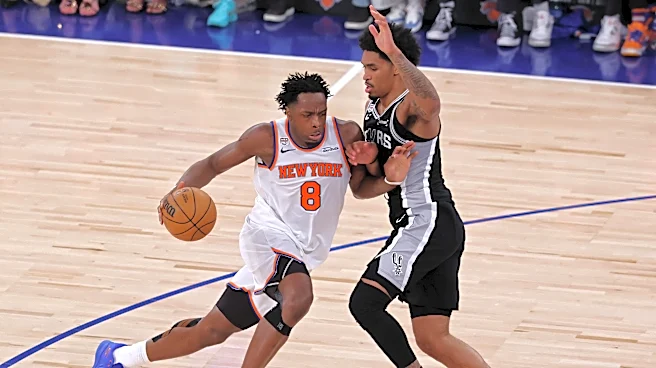
efficiency has been called into question. His field-goal percentage of 42.1% places him among the five lowest in Finals MVP history, alongside notable players like Kobe Bryant and Michael Jordan. Throughout the five-game series against the San Antonio Spurs, Brunson averaged 32.6 points, 4.2 rebounds, 4.6 assists, and 2.0 steals per game. His performance was characterized by a high volume of shots, taking 26.6 per game, and a significant role in the Knicks' offensive strategy.
Why It's Important?
The discussion around Brunson's efficiency highlights the broader debate on the value of efficiency versus effectiveness in basketball. While his shooting percentage was low, Brunson's ability to lead and deliver under pressure was crucial for the Knicks' success. This situation underscores the complexity of evaluating player performance, where statistical efficiency may not fully capture a player's impact on the game. For the Knicks, Brunson's leadership and resilience were pivotal in breaking a long-standing championship drought, demonstrating that sometimes, the ability to perform in critical moments outweighs statistical perfection.
What's Next?
As the Knicks celebrate their championship victory, the focus will likely shift to how they can build on this success. Brunson's performance, despite its inefficiencies, has set a high standard for leadership and determination. The team may look to strengthen their roster and address any weaknesses exposed during the Finals. Additionally, Brunson's role and strategy might be adjusted to improve efficiency while maintaining his effectiveness. The Knicks' management will need to balance these aspects as they prepare for the next season, aiming to sustain their competitive edge.
Beyond the Headlines
Brunson's Finals MVP award, despite the criticism, could influence how future MVPs are evaluated, potentially shifting the focus from pure efficiency to a more holistic view of a player's contribution. This could lead to a broader understanding of what constitutes value in high-stakes games, where leadership and the ability to perform under pressure are as critical as statistical output. The narrative around Brunson's performance may also inspire other players to embrace roles that require them to take on significant responsibility, even if it means sacrificing personal efficiency for team success.