






What's Happening?
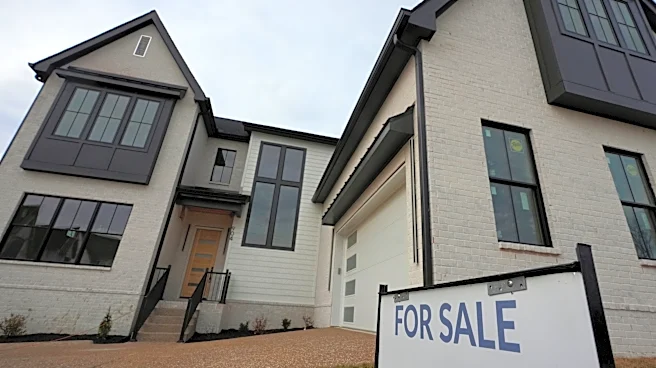
The U.S. housing market continues to struggle with low sales and rising prices, as reported by the National Association of Realtors (NAR). In April, sales of previously occupied homes were nearly flat, increasing by only 0.2% from March, reaching an annual
rate of 4.02 million units. This figure is significantly below the historical norm of 5.2 million units. The median sales price for homes rose by 0.9% year-over-year to $417,700, marking the highest April price on record since 1999. The market has been in a downturn since 2022, primarily due to rising mortgage rates. Despite a slight increase in available homes, inventory remains below pre-pandemic levels, with 1.47 million unsold homes at the end of April, translating to a 4.4-month supply at the current sales pace.
Why It's Important?
The ongoing challenges in the housing market have significant implications for the U.S. economy and potential homebuyers. The persistent inventory shortage and high prices make it difficult for many Americans to purchase homes, potentially widening the gap between homeowners and renters. The sluggish market also affects related industries, such as construction and real estate services, which rely on a healthy housing market for growth. Additionally, the high cost of housing can impact consumer spending, as individuals allocate more of their income towards housing expenses, leaving less for other goods and services. This situation underscores the need for policy interventions to address housing affordability and supply issues.
What's Next?
Looking ahead, the housing market may continue to face challenges unless there is a significant increase in inventory. The NAR's chief economist, Lawrence Yun, suggests that a 30% growth in inventory is necessary to balance the market. However, achieving this may require policy changes or incentives to encourage new construction and make existing homes more accessible. Stakeholders, including policymakers and industry leaders, may need to collaborate on strategies to address these issues. Additionally, potential fluctuations in mortgage rates, influenced by broader economic conditions, could further impact the market's trajectory.