






What's Happening?
A new resort has opened on the remote Japanese island of Sagishima, designed by the architectural firm BIG. The resort, developed by Not A Hotel, features three villas constructed using a traditional rammed-earth technique with soil from the site itself.
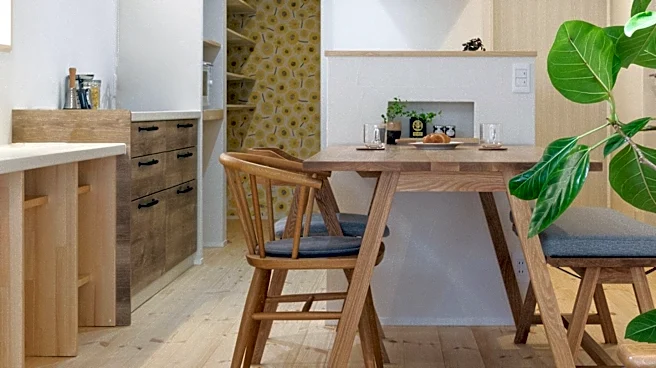
This design approach blends Scandinavian minimalism with Japanese architectural elements, creating a unique aesthetic. The villas, named 180, 270, and 360, are positioned at different elevations to offer varying views and privacy. The design incorporates glass facades reminiscent of shoji screens and black slate floors that suggest tatami mats, integrating both cultural influences into the architecture. The resort also includes a beachfront restaurant and a private beach, enhancing its appeal as a serene getaway.
Why It's Important?
The opening of this resort highlights the growing trend of integrating sustainable building techniques with cultural design elements. By using local materials and traditional construction methods, the resort minimizes its environmental impact while promoting cultural appreciation. This approach not only preserves the natural landscape but also offers guests an immersive experience that respects the local heritage. The blend of Scandinavian and Japanese design principles reflects a broader movement in architecture towards creating spaces that are both functional and aesthetically pleasing, catering to a global audience seeking unique and meaningful travel experiences.
What's Next?
The resort's innovative design and sustainable practices may influence future developments in the hospitality industry, encouraging more projects to adopt similar approaches. As travelers increasingly prioritize sustainability and cultural authenticity, resorts like this one could set a new standard for luxury accommodations. The success of this project might inspire other developers to explore the integration of local materials and traditional techniques in their designs, potentially leading to a shift in how resorts are conceptualized and constructed worldwide.
Beyond the Headlines
This development also raises questions about the balance between tourism and environmental conservation. While the resort's design is environmentally conscious, the influx of tourists to remote areas can strain local ecosystems. It is crucial for developers and local authorities to collaborate on sustainable tourism strategies that protect natural resources while supporting economic growth. Additionally, the resort's emphasis on cultural elements highlights the importance of preserving and celebrating local traditions in a globalized world, offering a model for how architecture can bridge cultural divides.