





What's Happening?
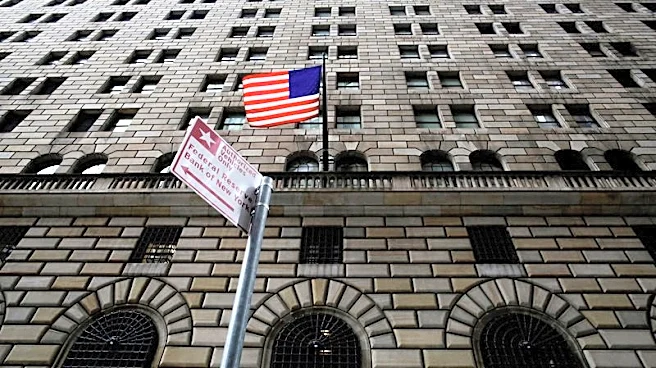
The Federal Reserve Bank of New York has released research indicating a significant $28 trillion gap between U.S. overseas assets and foreign-held U.S. assets. Currently, the U.S. holds $41 trillion in foreign assets, while foreign investors possess $69
trillion in U.S. assets. This imbalance, representing 90% of the U.S. GDP, has been exacerbated by rising interest rates and continued net sales of U.S. assets to foreign investors. The Fed's report highlights that the U.S. has historically benefited from a 'rate of return advantage,' earning more from its foreign investments than it paid out. However, this income surplus has diminished, becoming a 'servicing burden' on the U.S. economy. The report attributes this shift to increased interest rates post-COVID-19 and a substantial trade deficit, which has led to a $5.5 trillion deterioration in the balance of trade.
Why It's Important?
The growing foreign ownership of U.S. assets poses significant economic challenges. As foreign investors hold substantial amounts of U.S. debt and interest-paying assets, the rising interest rates have increased the cost of servicing these debts. This situation places additional pressure on the U.S. economy, potentially affecting consumer financial realities, such as mortgage rates and inflation. The imbalance also reflects broader economic vulnerabilities, as the U.S. becomes more sensitive to global financial pressures. The shrinking income surplus could lead to higher borrowing costs and persistent inflation, impacting consumer purchasing power and economic stability. This scenario underscores the need for strategic economic policies to address the trade deficit and manage foreign investment impacts.
What's Next?
The Federal Reserve's findings may prompt policymakers to consider measures to mitigate the economic impact of foreign ownership. Potential steps could include strategies to reduce the trade deficit and encourage domestic investment. Additionally, the U.S. may need to explore ways to enhance its economic resilience against global financial fluctuations. Stakeholders, including government officials and financial institutions, will likely monitor these developments closely to assess their implications for economic policy and financial markets. The ongoing economic uncertainty, coupled with geopolitical tensions, may further influence policy decisions aimed at stabilizing the U.S. economy.