
What's Happening?
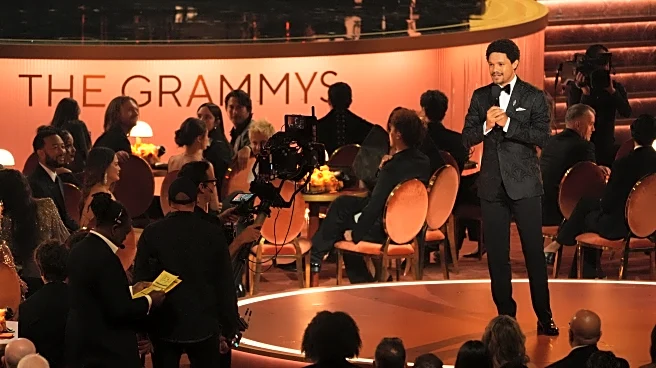
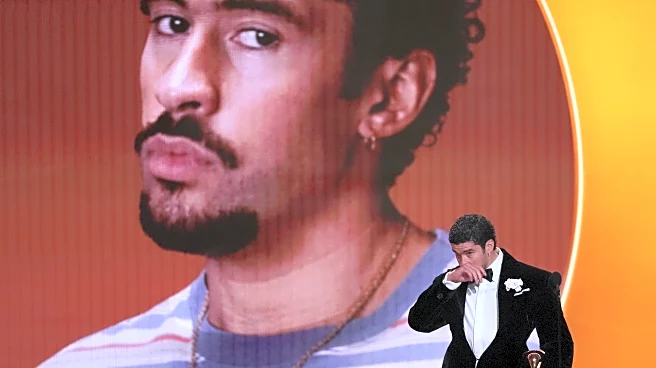
Bad Bunny made history at the Grammy Awards by winning Album of the Year for his album 'Débi Tirar Más Fotos,' marking the first time a Spanish-language album has received this honor. The album, described
as a love letter to Puerto Rico, was celebrated for its genre-bending style. During his acceptance speech, Bad Bunny expressed gratitude to his supporters and dedicated the award to those who have left their homelands to pursue their dreams. The ceremony also featured notable performances and wins, including Kendrick Lamar setting a record as the most awarded rapper in Grammys history with 27 awards. Other artists like Olivia Dean and Billie Eilish used their platform to address social issues, with Eilish making a pointed statement against immigration policies.
Why It's Important?
Bad Bunny's win is significant as it highlights the growing influence and recognition of Latin music in mainstream American culture. This achievement not only celebrates the artist's success but also represents a broader acceptance and appreciation of diverse musical expressions. The win could pave the way for more non-English albums to be recognized in major award categories, potentially influencing the music industry's approach to diversity and inclusion. Additionally, the social statements made by artists during the ceremony reflect the intersection of music and activism, showcasing how artists are using their platforms to address important societal issues.
What's Next?
Following his Grammy win, Bad Bunny is set to perform at the Super Bowl LX halftime show, which will further elevate his profile and potentially introduce his music to an even wider audience. The recognition of his work at the Grammys may encourage other artists to explore and incorporate diverse cultural influences in their music. The music industry might also see a shift towards more inclusive practices, recognizing the contributions of artists from various backgrounds. As Latin music continues to gain popularity, it could lead to more collaborations and cross-cultural exchanges within the industry.