



What's Happening?
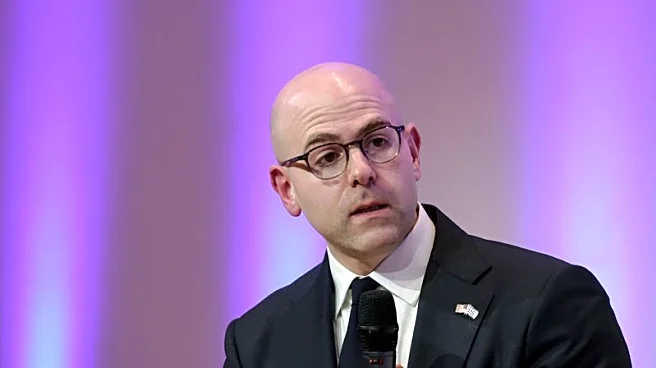
Recent data from the Bank of America Institute indicates a growing divergence in spending growth between higher-income and middle-income Americans. While spending among higher-income households has remained stable, middle-income households are experiencing increased financial stress. This trend is part of the so-called K-shaped economy, where lower-income households struggle while higher-income households benefit from stock gains and homeownership. Economist David Tinsley describes the current economic situation as resembling 'the jaws of a crocodile,' with the gap between income groups widening significantly since early 2022. The National Foundation for Credit Counseling (NFCC) reports that financial stress is reaching a tipping point, particularly
affecting middle-income consumers aged 45 to 60, who are finding it increasingly difficult to borrow money to maintain their lifestyle.
Why It's Important?
The widening gap in the K-shaped economy has significant implications for the U.S. economy. As middle-income households face mounting financial stress, their reduced spending power could slow economic growth. This demographic is crucial for consumer spending, which drives a large portion of the U.S. economy. The inability of middle-income consumers to access credit further exacerbates their financial challenges, potentially leading to increased debt defaults and reduced economic activity. The situation highlights the need for targeted economic policies to address income inequality and support struggling households. Additionally, larger tax refunds may temporarily boost consumer spending, but experts warn that this effect may be short-lived, with underlying economic disparities likely to persist.
What's Next?
As financial stress continues to rise among middle-income Americans, policymakers may need to consider interventions to support this demographic. Potential measures could include tax relief, increased access to affordable credit, or targeted financial assistance programs. The NFCC's forecast suggests that financial stress will peak in the first quarter of the year, prompting a need for timely action. Economists predict that the current economic divergences will reassert themselves in the latter half of the year, indicating that any relief measures may need to be sustained over a longer period to be effective.