


What's Happening?
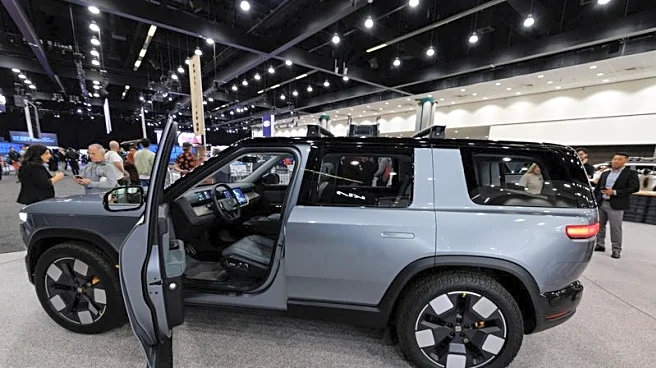
Rivian Automotive Inc. is gearing up for a significant production increase in 2026, driven by the launch of its new R2 sport-utility vehicle. The company aims to produce approximately 4,000 units per week by the end of the year, with a full-year output target of 62,000 to 67,000 vehicles. This represents a more than 45% increase from the 42,247 vehicles delivered in 2025. The R2, priced at around $50,000, is expected to attract buyers from competitors like Tesla's Model X. Rivian's CEO, R.J. Scaringe, describes the R2 as a 'game changer' for the company. The production ramp-up will occur at Rivian's Normal, Illinois factory, with plans to add a second shift by the end of the year. Despite the anticipated production growth, Rivian expects continued
financial losses, with capital spending projected to rise to $2 billion in 2026.
Why It's Important?
Rivian's aggressive production targets and the introduction of the R2 SUV are pivotal for the company's growth strategy in the competitive electric vehicle market. The R2's lower price point compared to Rivian's flagship R1 could help the company capture a larger market share, especially as competitors like Tesla phase out similar models. The increased production capacity and new vehicle launch are expected to enhance Rivian's market position and potentially increase its valuation. However, the financial strain from increased capital expenditure and anticipated losses could pose challenges. Investors have responded positively to Rivian's plans, with the company's stock price rising significantly, reflecting confidence in its growth trajectory.
What's Next?
Rivian plans to continue expanding its production capabilities, with the R2's launch being a central focus for 2026. The company is also working on developing its software partnership with Volkswagen and advancing its autonomy projects. As production ramps up, Rivian will need to manage its financial resources carefully to balance growth with profitability. The company's strategic decisions in the coming months will be crucial in determining its long-term success in the electric vehicle market. Stakeholders, including investors and industry analysts, will be closely monitoring Rivian's progress and financial performance.