
What's Happening?
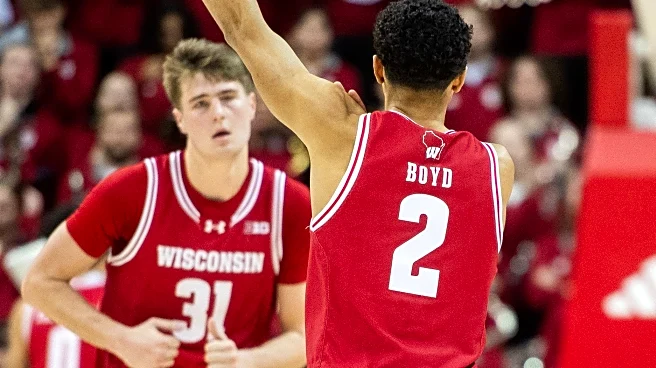
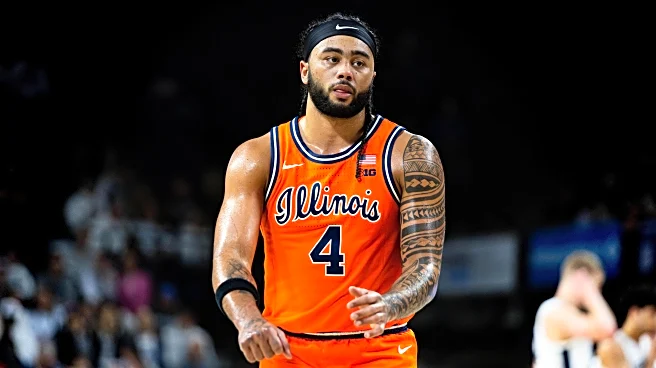
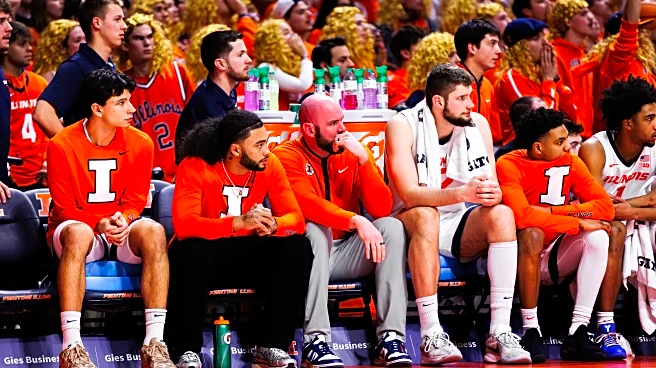
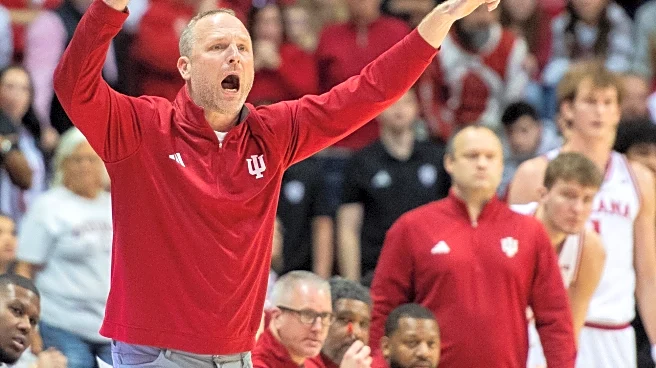
The Illinois men's basketball team recently faced Indiana, with a strategic advantage provided by former player Terrence Shannon Jr. Shannon, currently with the Minnesota Timberwolves, returned to Illinois during the NBA All-Star break to assist the team. He played a crucial role on the scout team, emulating Indiana's leading scorer, Lamar Wilkerson, in practice. This preparation was vital as Illinois aimed to recover from recent losses to Michigan State and Wisconsin. Kylan Boswell, a key defender for Illinois, returned from a hand injury to help neutralize Wilkerson, who was held to 21 points, slightly below his average. The game ended with Illinois defeating Indiana 71-51, marking a significant win for the team.
Why It's Important?
This event highlights the importance
of alumni involvement in college sports programs. Shannon's participation not only provided tactical benefits but also reinforced the sense of community and continuity within the Illinois basketball program. Such involvement can enhance team performance and morale, offering current players a connection to professional pathways. The presence of former players like Shannon, along with NBA rookies Will Riley and Kasparas Jakucionis, underscores the program's success in developing professional athletes. This can be a powerful recruiting tool, attracting new talent eager to join a program with a proven track record of advancing players to the NBA.
What's Next?
Looking forward, Illinois aims to build on this victory as they continue their season. The involvement of former players may become a more regular feature, providing ongoing support and mentorship to current team members. Additionally, the presence of high-profile alumni could influence recruitment, as prospective players witness the strong network and opportunities available through the program. Illinois will likely continue to leverage these relationships to maintain competitive performance and attract top talent.
Beyond the Headlines
The return of former players to assist current teams reflects broader trends in college sports, where alumni networks play a crucial role in program success. This practice not only benefits the team strategically but also fosters a culture of loyalty and tradition. As college sports increasingly navigate challenges like the transfer portal and NIL deals, maintaining strong alumni connections can provide stability and continuity. This approach may serve as a model for other programs seeking to enhance their competitive edge and player development pathways.