


What's Happening?
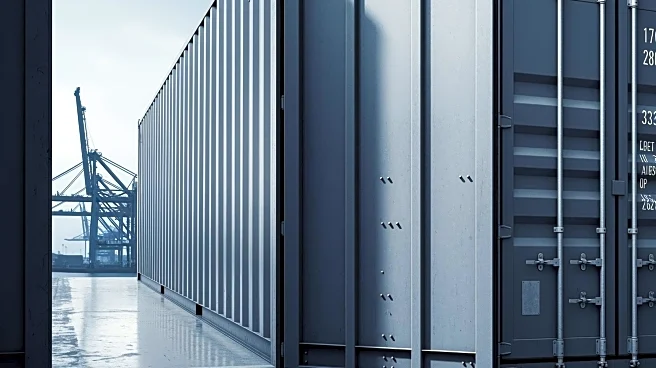
The liner shipping industry is approaching a 'structural reset' as freight rates normalize and pandemic-era financial windfalls diminish. According to Drewry's 2026 Financial Health Check, the sector is experiencing a downturn as a massive newbuilding orderbook is delivered. Liquidity, previously bolstered by cash generation, is now reliant on asset disposals, government support, or refinancing. Companies like Ocean Network Express have reported significant losses, and industry experts predict further financial challenges as freight rates continue to decline.
Why It's Important?
The end of the container shipping supercycle has significant implications for the global supply chain and the U.S. economy. As freight rates decrease, shipping companies may face financial
strain, potentially leading to consolidation within the industry. This could affect the cost and availability of goods, impacting businesses and consumers. The need for capital discipline and operational efficiency is critical to avoid repeating past boom-and-bust cycles, which could destabilize the industry further.
What's Next?
Shipping companies are expected to focus on cost-saving measures, such as slow-steaming and vessel idling, to manage capacity and maintain financial stability. The industry's ability to adapt to these changes will be crucial in determining its future trajectory. Additionally, the return to using the Suez Canal for shorter sailing distances could free up global shipping capacity, influencing freight rates and operational strategies. Stakeholders will need to monitor these developments closely to navigate the evolving market conditions.