




What's Happening?
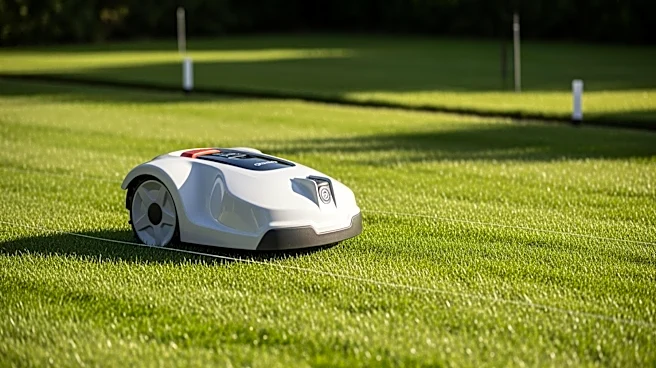
The robotic lawn mower industry is undergoing a significant transformation as it moves away from traditional boundary-line systems towards boundary-free technology. Historically, robotic mowers relied on boundary wires to define their operational areas,
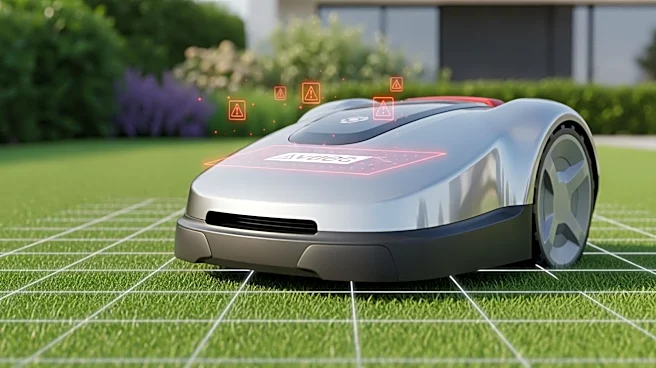
but these systems are becoming obsolete due to their complex installation and maintenance requirements. The new generation of robotic mowers utilizes advanced technologies such as AI vision, RTK positioning, and SLAM for spatial mapping, allowing for more intelligent and autonomous operation. These innovations enable mowers to navigate complex environments without the need for physical boundaries, offering a plug-and-play experience that aligns with modern user expectations for smart home devices.
Why It's Important?
This shift towards boundary-free technology in robotic lawn mowers is significant for several reasons. It reduces the complexity and cost associated with installation and maintenance, making these devices more accessible to a broader range of consumers. For manufacturers, this transition represents an opportunity to enhance product offerings and meet the growing demand for smart, autonomous home devices. The adoption of advanced navigation technologies also positions the industry to better serve commercial applications, such as campus and property management, where scalability and efficiency are critical. As the technology matures, it is expected to drive long-term growth in the smart garden equipment market.
What's Next?
As the industry continues to evolve, manufacturers are likely to focus on overcoming the remaining technical challenges associated with boundary-free technology. These include improving positioning stability in complex environments and enhancing the recognition of irregular obstacles. Additionally, efforts towards standardizing navigation systems and communication protocols will be crucial to reducing compatibility issues and lowering switching costs for consumers. As these challenges are addressed, the adoption of boundary-free robotic lawn mowers is expected to accelerate, further transforming the industry.
Beyond the Headlines
The move towards boundary-free robotic lawn mowers reflects a broader trend in the smart home industry towards devices that offer greater autonomy and intelligence. This evolution is not just about removing physical boundaries but also about enabling devices to understand and interact with their environments in more sophisticated ways. As these technologies become more prevalent, they could lead to new business models and opportunities for innovation in related sectors, such as landscaping and property management.