



What's Happening?
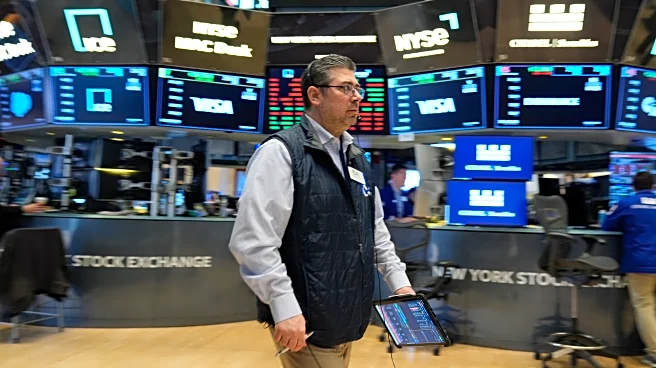
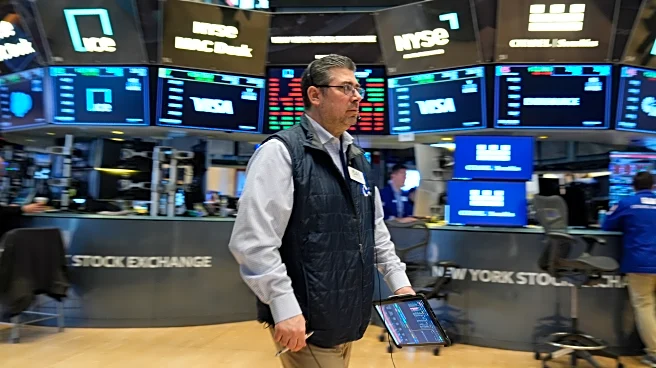
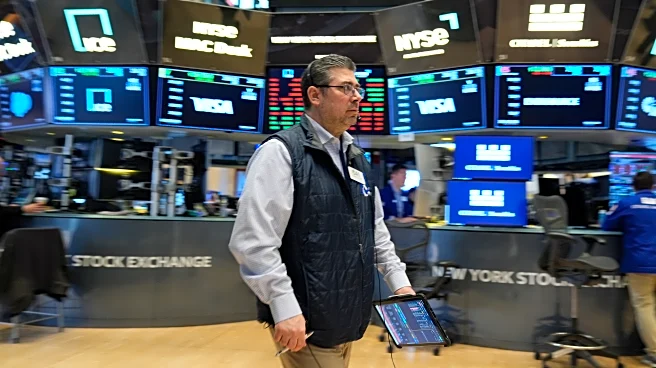
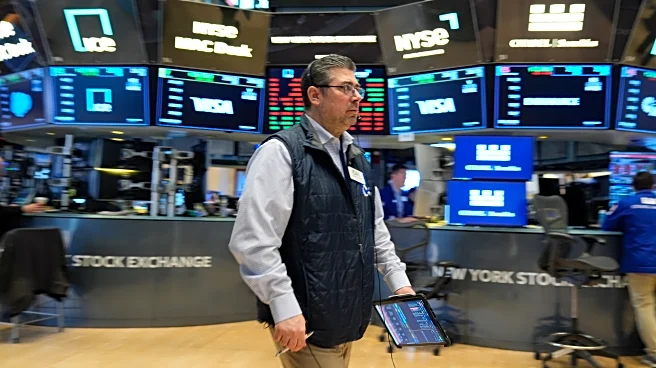
The U.S. stock markets experienced significant declines on March 20, 2026, marking the fourth consecutive week of losses. The Dow Jones Industrial Average fell by 0.97%, closing at 45,574.92, while the S&P 500 and Nasdaq also saw substantial drops of 1.51%
and 2.01%, respectively. These declines are attributed to the ongoing conflict in the Middle East, particularly the war involving Iran, which has led to a sharp increase in oil prices. The Strait of Hormuz, a critical passage for global oil shipments, remains effectively closed, causing Brent crude prices to rise to $111.74 per barrel. The economic impact of these developments is causing concern among economists, who predict a slowdown in consumption growth due to rising gasoline prices. The Pentagon's deployment of additional Marines to the Middle East and Iraq's declaration of force majeure on oilfields operated by foreign companies further exacerbate the situation.
Why It's Important?
The ongoing conflict in the Middle East and the resulting surge in oil prices have significant implications for the U.S. economy. Rising oil prices contribute to higher inflation, which can slow economic growth and affect consumer spending. The stock market's reaction reflects investor concerns about the potential for prolonged economic instability. The Federal Reserve's recent decision to leave interest rates unchanged highlights the uncertainty surrounding the economic outlook. Economists are particularly worried about the impact on inflation and the possibility of stagflation, a scenario of stagnant growth coupled with high inflation. The situation underscores the interconnectedness of global events and their direct impact on U.S. markets and economic policy.
What's Next?
The future trajectory of the U.S. stock markets and the broader economy will largely depend on developments in the Middle East. If the conflict continues, it could lead to sustained high oil prices and further economic challenges. Investors and policymakers will be closely monitoring the situation, particularly any changes in oil supply and geopolitical tensions. The Federal Reserve may need to adjust its monetary policy in response to evolving economic conditions. Additionally, businesses and consumers will have to navigate the potential for increased costs and economic uncertainty.