

What's Happening?
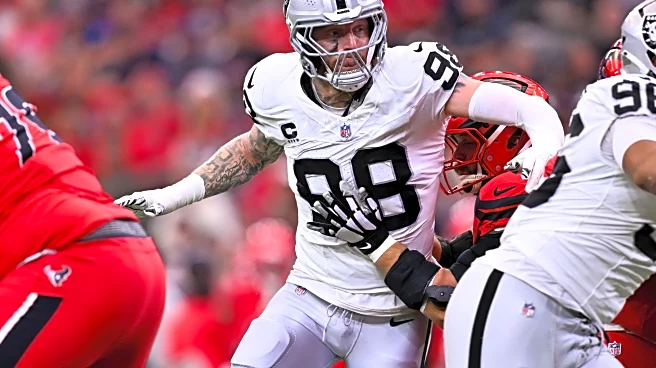
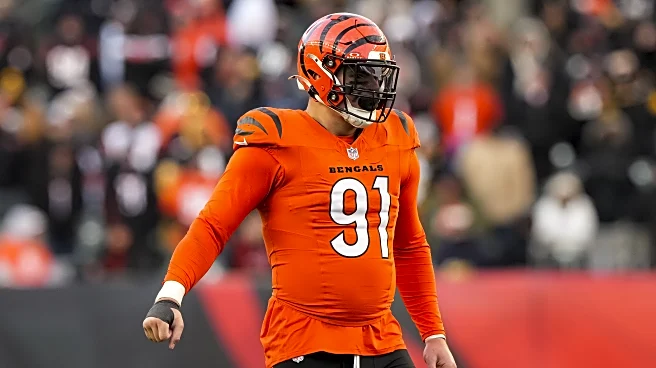
The 2026 NFL free agency period has seen significant transactions and controversies. The Baltimore Ravens backed out of a trade for Maxx Crosby, citing medical concerns, and instead signed Trey Hendrickson to a four-year, $112 million deal. The Indianapolis
Colts secured quarterback Daniel Jones with a two-year, $88 million contract. Meanwhile, the Washington Commanders made several strategic signings, including tight end Chig Okonkwo and safety Nick Cross. These moves reflect the dynamic nature of NFL free agency, with teams navigating complex negotiations and player evaluations.
Why It's Important?
The decisions made during the NFL free agency period can have lasting impacts on team performance and league dynamics. The Ravens' pivot from Crosby to Hendrickson highlights the importance of medical evaluations in player transactions, while the Colts' investment in Daniel Jones underscores the value placed on quarterback stability. The Commanders' acquisitions demonstrate strategic planning to enhance their roster. These developments may influence team strategies and fan expectations, as franchises aim to build competitive lineups for the upcoming season.
What's Next?
As the free agency period continues, teams will finalize their rosters and prepare for the 2026 NFL season. The Ravens may face scrutiny over their handling of the Crosby trade, potentially impacting their reputation and future negotiations. The Colts will focus on integrating Daniel Jones into their offensive strategy, while the Commanders aim to capitalize on their new signings. Fans and analysts will closely monitor these teams' performances, assessing the effectiveness of their free agency decisions.
Beyond the Headlines
The controversies surrounding the Ravens' trade decisions highlight the ethical considerations in professional sports, where player health and transparency are paramount. The financial implications of high-value contracts, such as Hendrickson's deal, reflect broader economic trends in the NFL, where teams must balance investment with performance outcomes. These developments may influence future negotiations and contract structures, as franchises seek to optimize their financial and competitive positions.