




What's Happening?
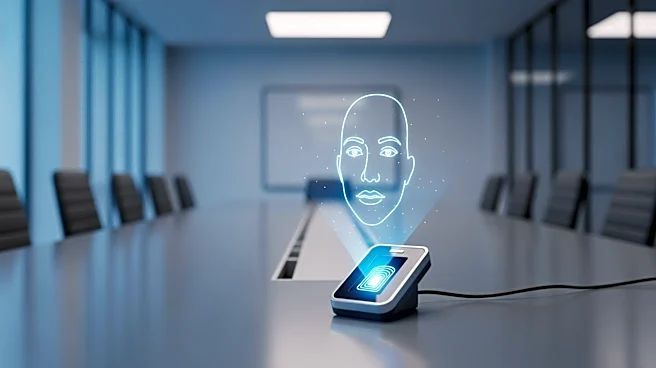
Zoom has partnered with World, a biometric identity company co-founded by Sam Altman, to introduce a new feature that verifies meeting participants are human and not AI-generated deepfakes. This integration uses World’s Deep Face technology, which cross-references
a participant’s live video feed against their iris-scanned biometric profile, displaying a 'Verified Human' badge when the match is successful. This feature is a response to the increasing threat of deepfake fraud, which has resulted in significant financial losses for businesses. For instance, engineering firm Arup lost $25 million in a deepfake incident. The technology requires participants to have a World ID, obtained through iris scanning at one of World’s Orb devices. While this feature aims to enhance security, it has faced regulatory scrutiny in several countries due to privacy concerns.
Why It's Important?
The introduction of biometric verification in Zoom meetings highlights the growing concern over deepfake technology and its potential to facilitate fraud. As deepfake-enabled fraud has become a billion-dollar issue, with significant financial implications for businesses, the need for reliable identity verification methods has become critical. This development could set a precedent for other communication platforms to adopt similar security measures, potentially reshaping how virtual meetings are conducted. However, the requirement for biometric data raises privacy and regulatory challenges, which could impact the adoption of such technologies. Companies must weigh the benefits of enhanced security against the potential risks of data privacy violations.
What's Next?
As Zoom rolls out this biometric verification feature, businesses will need to decide whether the security benefits outweigh the privacy concerns and regulatory risks. The feature is likely to be adopted by high-stakes industries where identity verification is crucial, such as finance and corporate sectors. However, regulatory scrutiny, particularly in regions with strict data protection laws, may limit its widespread adoption. Companies will need to navigate these challenges carefully, considering both the legal implications and the potential impact on user trust.
Beyond the Headlines
The integration of biometric verification in virtual meetings could have broader implications for privacy and data security. As more companies consider adopting similar technologies, there may be increased pressure on regulatory bodies to establish clear guidelines and standards for biometric data usage. This could lead to a reevaluation of privacy laws and the development of new frameworks to address the ethical and legal challenges posed by biometric technologies. Additionally, the reliance on physical devices for biometric registration may create barriers to entry, particularly for users in regions with limited access to such technology.