







What's Happening?
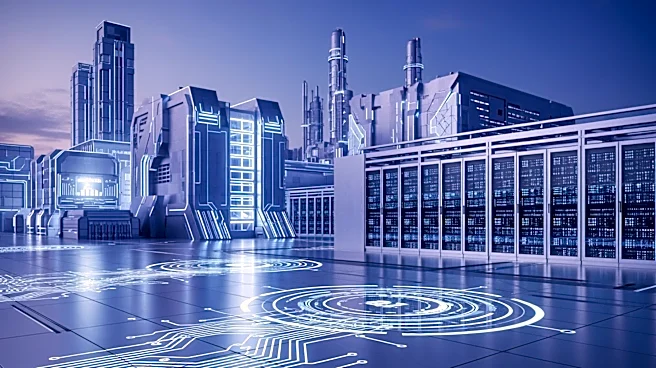
Riot Platforms has announced a memorandum of understanding with Terrestrial Energy to explore the development of nuclear-powered data centers. This initiative aims to create multiple 390 MW data centers, potentially scaling up to 4 GW of clean energy
capacity, with natural gas serving as a transitional fuel. This strategic move marks a significant shift for Riot Platforms, which is traditionally known for its Bitcoin mining operations. The company is now looking to expand its business model to include power-intensive AI and high-performance computing infrastructure. This partnership with Terrestrial Energy is seen as a step towards diversifying Riot's revenue streams and reducing its reliance on the volatile Bitcoin market.
Why It's Important?
The collaboration between Riot Platforms and Terrestrial Energy is significant as it represents a strategic pivot towards sustainable energy solutions in the tech industry. By leveraging nuclear power, Riot Platforms aims to provide a stable and clean energy source for AI and high-performance computing, which are increasingly in demand. This move could potentially position Riot as a leader in the emerging market for sustainable data centers. However, the success of this initiative will depend on Riot's ability to secure paying tenants for the new capacity and manage the execution risks associated with such a large-scale project. The outcome of this venture could have broader implications for the tech industry, particularly in how companies approach energy consumption and sustainability.
What's Next?
Riot Platforms will need to focus on executing the development of these nuclear-powered data centers and securing contracts with clients who require high-performance computing capabilities. The company will also need to manage its existing Bitcoin mining operations while transitioning to this new business model. Stakeholders will be watching closely to see how Riot balances these priorities and whether it can achieve the projected revenue growth. The success of this initiative could influence other tech companies to explore similar sustainable energy solutions, potentially leading to a shift in how data centers are powered globally.