



What's Happening?
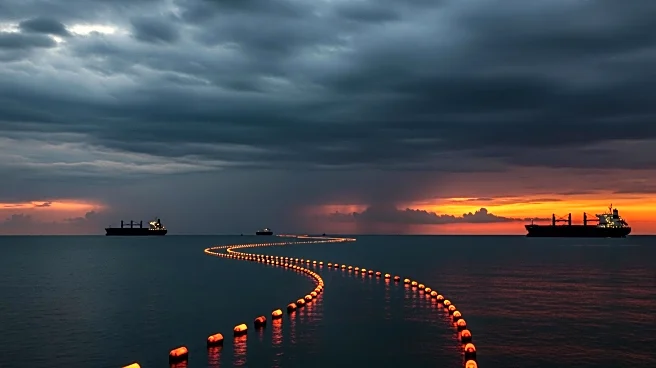
The ongoing conflict involving Iran has led to a significant surge in global oil prices, with Brent crude briefly surpassing $80 per barrel. This increase follows the effective halt of tanker traffic through the Strait of Hormuz, a critical chokepoint
for global oil and liquefied natural gas (LNG) trade. The U.S. and Israel's military actions against Iran have exacerbated tensions, leading to concerns over the safety of vessels in the Gulf waters. As a result, shipping companies are avoiding the strait, causing a disruption in oil flows. Despite the rise in oil prices, the market has not reached a state of panic, partly due to existing oil stockpiles and strategic reserves. However, analysts warn that prolonged disruptions could lead to further price increases.
Why It's Important?
The surge in oil prices has direct implications for the U.S. economy, particularly in terms of gasoline costs. Analysts predict that U.S. gasoline prices could rise by 10-30 cents per gallon, with some areas experiencing even higher increases. This could affect consumer spending and inflation rates, as higher fuel costs typically lead to increased prices for goods and services. Additionally, the U.S., as a major exporter of LNG, may see benefits from higher natural gas prices, although this could also lead to increased electricity costs domestically. The situation underscores the vulnerability of global energy markets to geopolitical tensions and the importance of strategic reserves and alternative energy sources.
What's Next?
The future trajectory of oil prices will largely depend on the duration and intensity of the conflict. If the situation stabilizes quickly, markets may return to normalcy. However, if the conflict persists, further disruptions in oil supply could occur, potentially leading to more significant economic impacts. OPEC+ has announced a production increase, but the effectiveness of this measure is uncertain given the current logistical challenges. Stakeholders, including governments and energy companies, will need to monitor developments closely and consider contingency plans to mitigate potential disruptions.