


What's Happening?
Researchers from Lawrence Livermore National Laboratory, the University of Illinois Urbana-Champaign, and the University of Kentucky have developed a microbial platform to produce oxalic acid, a critical chemical for refining rare earth elements. This
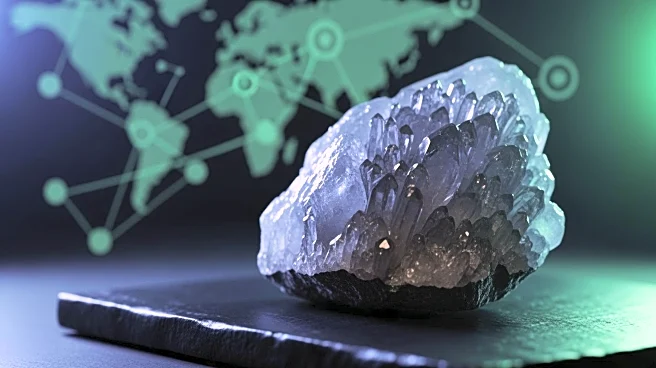
innovation aims to address the U.S. supply chain challenges for rare earth elements, which are currently dominated by China. The bio-based process is expected to be cost-competitive with commercial chemical methods and provides an independent source of oxalic acid. The research, published in Nature Communications, highlights the potential for strengthening domestic critical materials supply chains by integrating microbial production with rare earth element recovery.
Why It's Important?
The development of a domestic supply chain for rare earth elements is crucial for the U.S., as these materials are essential for various high-tech applications, including electronics and defense systems. The reliance on China for both rare earth elements and oxalic acid poses a strategic vulnerability. By creating a bio-based method to produce oxalic acid, the U.S. can reduce its dependency on foreign sources and enhance its economic and national security. This advancement could lead to more sustainable and resilient supply chains, benefiting industries reliant on these critical materials.
What's Next?
The research team is focused on optimizing and scaling up the microbial platform to increase the yield of oxalic acid, making the process more commercially viable. Further developments in this area could lead to the establishment of a robust domestic supply chain for rare earth elements, reducing lead times and costs associated with importing oxalic acid. The success of this initiative may prompt further investments in bioengineering solutions for other critical materials.