
What's Happening?
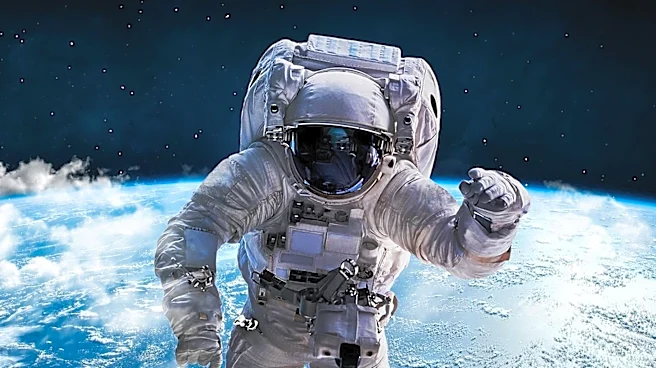
Research is drawing parallels between the effects of ageing on Earth and the accelerated ageing experienced by astronauts in space. Factors such as sedentary lifestyles, disrupted circadian rhythms, and social
isolation on Earth mimic the conditions faced by astronauts, leading to similar health impacts. NASA's twin study, involving astronauts Scott and Mark Kelly, revealed that extended time in space can accelerate ageing processes, including inflammation and mitochondrial dysfunction. These findings suggest that the stressors of space travel, such as microgravity and radiation exposure, have terrestrial counterparts that contribute to age-related decline.
Why It's Important?
Understanding the parallels between space-induced ageing and Earth-based ageing could have significant implications for public health and geroscience. By studying astronauts, researchers can gain insights into the mechanisms of ageing and develop interventions to mitigate its effects. This research could lead to advancements in anti-ageing therapies and improve the quality of life for the ageing population. Additionally, the findings highlight the importance of addressing lifestyle factors such as physical inactivity and social isolation, which are prevalent in modern society and contribute to health decline.
Beyond the Headlines
The study underscores the potential for space research to inform healthcare practices on Earth. As NASA continues to explore long-duration space missions, the knowledge gained from astronaut health studies could lead to innovations in medical treatments and preventive care. The research also emphasizes the interconnectedness of environmental and lifestyle factors in the ageing process, suggesting that holistic approaches may be necessary to address age-related health challenges.